


The Global Infrastructure Race: Why Governments Are Investing Heavily in Construction and Industrial Materials
A New Global Infrastructure Cycle Is Emerging
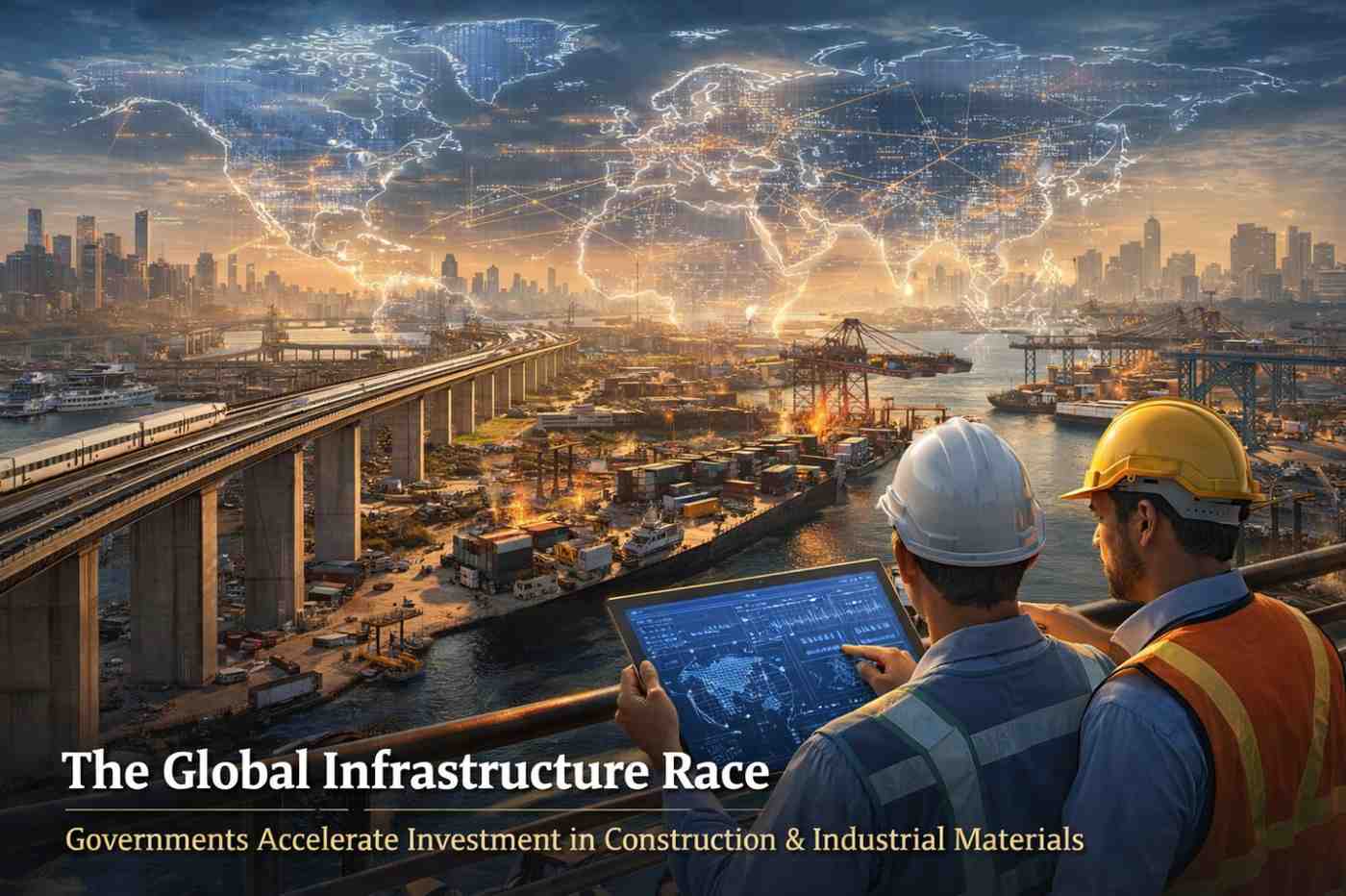
Global infrastructure investment refers to government spending on large-scale projects such as highways, railways, energy systems, ports, and urban development. Countries around the world are increasing infrastructure budgets to stimulate economic growth, improve logistics networks, and support industrial expansion.
According to global infrastructure forecasts, more than $100 trillion in infrastructure investment may be required by 2040 to meet rising urbanization and economic development needs.
Governments typically invest in infrastructure to:
stimulate economic growth and job creation
modernize transportation and logistics networks
support manufacturing and industrial development
improve energy and digital infrastructure
As infrastructure spending increases globally, demand for steel, cement, and construction materials is also expected to grow significantly.
Major Economies Are Increasing Infrastructure Budgets
Across both developed and emerging economies, infrastructure spending has become a central pillar of economic policy.
United States: A $550 Billion Infrastructure Push
In the United States, the government approved the Infrastructure Investment and Jobs Act, which allocated approximately $550 billion in new infrastructure spending.
The program focuses on several key areas:
modernization of highways and bridges
expansion of rail networks and public transit
upgrades to power grids and energy systems
broadband and digital infrastructure expansion
modernization of ports and airports
Such large-scale investment programs are expected to stimulate economic growth while also increasing demand for industrial materials used in construction and manufacturing.
European Union: Infrastructure for the Green Transition
The European Union has also launched large-scale infrastructure programs through initiatives such as NextGenerationEU, which directs roughly €300 billion toward infrastructure and energy transition projects.
Key investment priorities include:
renewable energy infrastructure
green transportation networks
digital connectivity
industrial modernization
These investments are designed not only to support economic recovery but also to accelerate Europe’s transition toward sustainable energy systems.
China: Infrastructure as an Economic Engine
China continues to remain one of the world’s largest infrastructure investors. The country has consistently invested hundreds of billions of dollars annually in large-scale projects that include:
high-speed rail networks
urban transportation systems
logistics corridors and industrial zones
ports and maritime trade infrastructure
Infrastructure spending has long been used as a strategic tool to stimulate economic growth and strengthen China’s position in global trade networks.
India: Rapid Infrastructure Expansion
India is also witnessing a significant expansion in infrastructure spending as the government prioritizes connectivity and industrial development.
Recent budget allocations show:
₹11.21 lakh crore ($130+ billion) allocated for infrastructure capital expenditure
Long-term plans to invest ₹143 lakh crore ($1.7 trillion) in infrastructure by 2030
Major projects include:
national highway expansion
dedicated freight corridors
airport modernization
port connectivity programs
smart city development initiatives
These investments aim to improve logistics efficiency and support the country’s rapidly expanding economy.
Why Infrastructure Investment Drives Demand for Industrial Materials
Large infrastructure projects require enormous quantities of structural materials. Steel, cement, and other industrial inputs form the backbone of modern construction and transportation networks.
For example, infrastructure projects rely heavily on materials such as:
reinforced steel bars used in structural frameworks
cement and concrete for foundations and load-bearing structures
fabricated steel sections for bridges and industrial buildings
industrial fasteners and connectors used in heavy construction
Among these materials, reinforced steel bars play a particularly important role in ensuring structural strength and durability in modern construction.
Global conflicts don’t just affect politics — they impact supply chains, oil prices, steel markets & construction costs.
— SG Mart (@sgmart_official) March 5, 2026
Here’s how the Israel–Iran war could influence the global steel industry and infrastructure sector.https://t.co/6BPbhc1jfb#SteelIndustry #IranWar2026 pic.twitter.com/DvXvg0R9oX
Infrastructure Development Is Reshaping Supply Chains
As infrastructure investment accelerates globally, supply chains for construction materials are also evolving.
Construction companies and developers are increasingly prioritizing:
reliable sourcing of industrial materials
supply chain resilience
regional manufacturing networks
stronger partnerships with material suppliers
In many cases, project developers prefer working with trusted construction material suppliers capable of ensuring consistent supply during large projects.
Infrastructure Spending and the Steel Demand Cycle
Historically, infrastructure investment has been closely linked with rising demand for steel and industrial metals.
Large-scale public works programs often create what analysts describe as an infrastructure-driven steel demand cycle, where sustained government spending generates steady demand for construction materials.
Industries that typically benefit from these investment cycles include:
steel manufacturing
cement production
structural fabrication
construction engineering
industrial fasteners and hardware manufacturing
Infrastructure Investment as an Economic Stimulus
Governments frequently use infrastructure spending as a strategy to stimulate economic activity during periods of economic slowdown.
Infrastructure development supports economic growth in several ways:
creating employment across construction and manufacturing sectors
improving logistics efficiency for businesses
attracting private investment to developing regions
reducing transportation costs and improving trade connectivity
Because of these economic benefits, infrastructure investment often produces multiplier effects across multiple industries, particularly those related to construction and industrial materials.
The Future of Global Infrastructure Development
Looking ahead, global infrastructure demand is expected to remain strong as economies continue expanding and urban populations grow.
Several long-term trends will continue driving infrastructure investment worldwide:
Urban Expansion
Cities are growing rapidly, requiring new housing, transport networks, and utilities.
Industrial Growth
Manufacturing expansion requires logistics hubs, freight corridors, and port infrastructure.
Energy Transition
Governments are investing in renewable energy grids, electric mobility, and power infrastructure.
Trade and Logistics
Countries are strengthening ports, railways, and highways to support international trade.
These developments suggest that infrastructure spending will remain a major driver of demand for construction materials in the coming decades.
Conclusion: Infrastructure Investment Is Transforming Industrial Markets
The current surge in global infrastructure investment represents a major shift in economic strategy across many nations.
As governments commit trillions of dollars to transportation networks, energy systems, and urban development, demand for construction materials such as steel and cement will continue to grow.
For industries connected to infrastructure development, including construction and building material supply chains, this global investment cycle presents both opportunities and challenges.
In the years ahead, the ability to ensure reliable access to high-quality construction materials will remain essential for supporting the next generation of infrastructure development worldwide.
