

Global Market Volatility in 2026: A Data-Driven Analysis of Its Impact on Steel and Construction
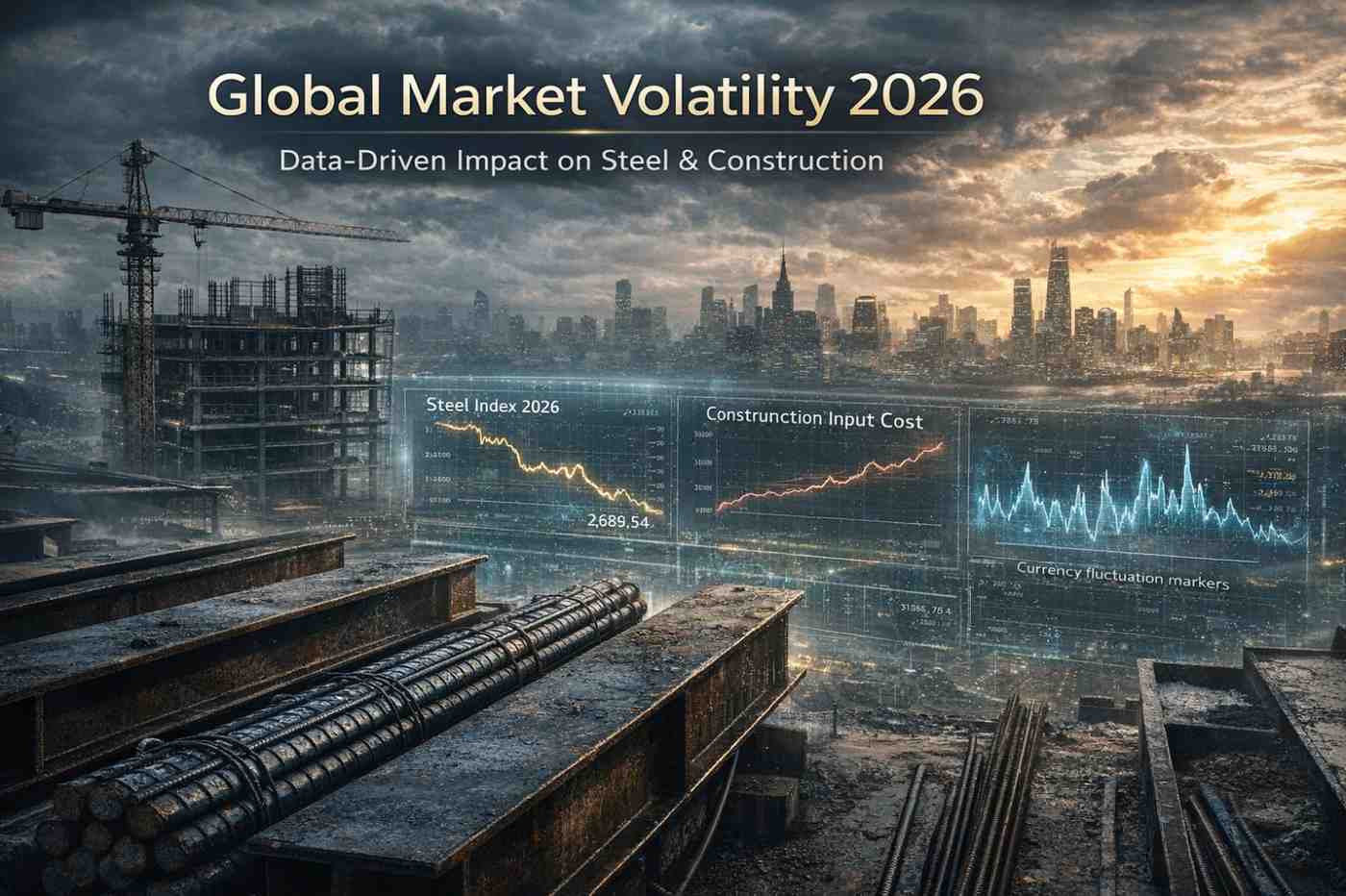
The global economy in 2026 is not facing a collapse — it is undergoing recalibration. Inflation control measures, infrastructure investments, supply chain restructuring, and energy transition policies are interacting simultaneously. For the steel and construction industries, these shifts are measurable, not theoretical.
This article breaks down the ongoing market dynamics using economic indicators and sectoral data trends to understand their impact on steel and related markets.
1. Global Growth Trends: Slower but Not Contracting
According to recent multilateral economic projections, global GDP growth has moderated compared to post-pandemic recovery highs but remains positive across most major economies.
Key observations:
Developed markets show moderate growth due to higher interest rates.
Emerging economies continue infrastructure-led expansion.
Government capital expenditure remains elevated in transport and energy sectors.
Historically, even a 1% increase in infrastructure spending can generate a 1.5–2% increase in steel consumption, depending on project intensity.
This indicates that steel demand remains structurally supported despite financial tightening.
2. Infrastructure Spending Remains a Core Demand Driver
Across multiple regions:
Transportation networks (rail, highways, ports) are expanding.
Renewable energy capacity installations are accelerating.
Urban housing projects continue in emerging economies.
Infrastructure projects are steel-intensive by nature. For example:
A single kilometer of highway construction can consume 150–200 tons of steel.
Wind turbines require 120–180 tons of steel per megawatt of capacity.
Large commercial buildings allocate 15–25% of total structural cost to steel materials.
Even if private real estate slows, public infrastructure programs provide demand stability.
Large-scale infrastructure expansion increases demand for high-strength TMT steel bars for infrastructure projects, as structural durability and load-bearing capacity become critical in modern construction planning.
3. Interest Rates and Construction Financing
Central banks in several economies have maintained relatively higher interest rates to control inflation.
Impact on steel demand:
Residential real estate projects show slower approval rates in some markets.
Commercial developers are re-evaluating financing costs.
Short-term construction starts may fluctuate.
However, large government-backed infrastructure projects are less sensitive to short-term rate cycles, maintaining baseline steel consumption levels.
This creates a bifurcated demand structure:
Moderate slowdown in private housing.
Continued momentum in public infrastructure.
4. Energy Prices and Steel Production Costs
Steel manufacturing remains energy-intensive.
Cost sensitivity factors:
Electricity prices directly impact electric arc furnace production.
Fuel and coking coal influence traditional blast furnace costs.
Carbon compliance mechanisms increase operating expenses in regulated regions.
When energy prices rise 10%, steel production costs can increase by 2–5%, depending on the production method.
This cost pressure is often transferred downstream to construction and manufacturing sectors.
With ongoing global market fluctuations, tracking the latest TMT bar prices in India has become essential for contractors and developers managing project budgets efficiently.
5. Raw Material Dynamics: Iron Ore & Coal
Steel output closely correlates with iron ore demand.
Recent market observations indicate:
Iron ore prices remain responsive to infrastructure announcements.
Supply disruptions or export policy changes quickly affect global pricing.
Mining investment cycles lag steel demand cycles by several quarters.
Any supply imbalance between raw material production and finished steel output can intensify price volatility.
6. Renewable Energy Expansion: A Structural Demand Booster
Energy transition policies are not short-term economic stimuli; they represent multi-decade commitments.
Steel demand from renewable energy includes:
Transmission towers
Wind turbine towers
Offshore platform foundations
As countries expand grid infrastructure and renewable installations, structural steel consumption remains resilient even during broader economic moderation.
7. Supply Chain Restructuring and Regionalization
Post-pandemic and geopolitical shifts have encouraged domestic production strategies.
Consequences include:
Increased capacity investments in regional steel plants.
Trade measures protecting domestic industries.
Strategic reserves of industrial raw materials.
While this enhances long-term resilience, it can create short-term inefficiencies and pricing disparities between regions.
8. Impact on Related Markets
Construction Sector
Material cost variability forces tighter procurement strategies and risk management.
Automotive Industry
EV manufacturing and structural redesigns maintain steady steel usage, although demand patterns shift toward specialized grades.
Manufacturing & Capital Goods
Industrial expansion linked to reshoring initiatives sustains structural steel consumption.
Mining & Logistics
Steel demand cycles directly influence freight volumes and mining output.
9. Is This a Supercycle or Stabilization Phase?
A true supercycle requires:
Simultaneous global infrastructure expansion
Structural energy transition
Sustained emerging market urbanization
Limited oversupply in production capacity
Current data suggests strong structural drivers but also cautious capital deployment due to financial tightening.
Rather than a sudden surge, the more realistic scenario is a prolonged, moderately upward demand trajectory supported by infrastructure and energy transformation.
10. Strategic Implications for the Steel & Construction Ecosystem
For industry participants:
Procurement strategies must incorporate price volatility buffers.
Long-term supplier partnerships reduce risk exposure.
Monitoring energy and raw material indicators is critical.
Cost forecasting models should integrate macroeconomic data, not just spot prices.
For content creators and industry analysts, this environment offers opportunities to produce informed, data-backed insights that connect macroeconomic indicators to operational impact.
In volatile market conditions, partnering with a trusted steel supplier in India can significantly reduce procurement risks and ensure consistent material quality across large projects.
Conclusion
The ongoing global market phase is not defined by extreme contraction or explosive growth. It is characterized by structural transition.
Infrastructure investment remains strong.
Energy transition is accelerating.
Supply chains are being restructured.
Financing conditions are tighter but manageable.
Steel, as a foundational industrial material, reflects all these forces simultaneously.
Understanding the data behind these trends allows industry professionals to move from reactive decision-making to strategic planning.
In volatile markets, data-driven insight is not optional — it is a competitive advantage.
