

Why Infrastructure Growth in India Is Driving the Next Steel Demand Cycle in 2026
The Beginning of a New Steel Supercycle
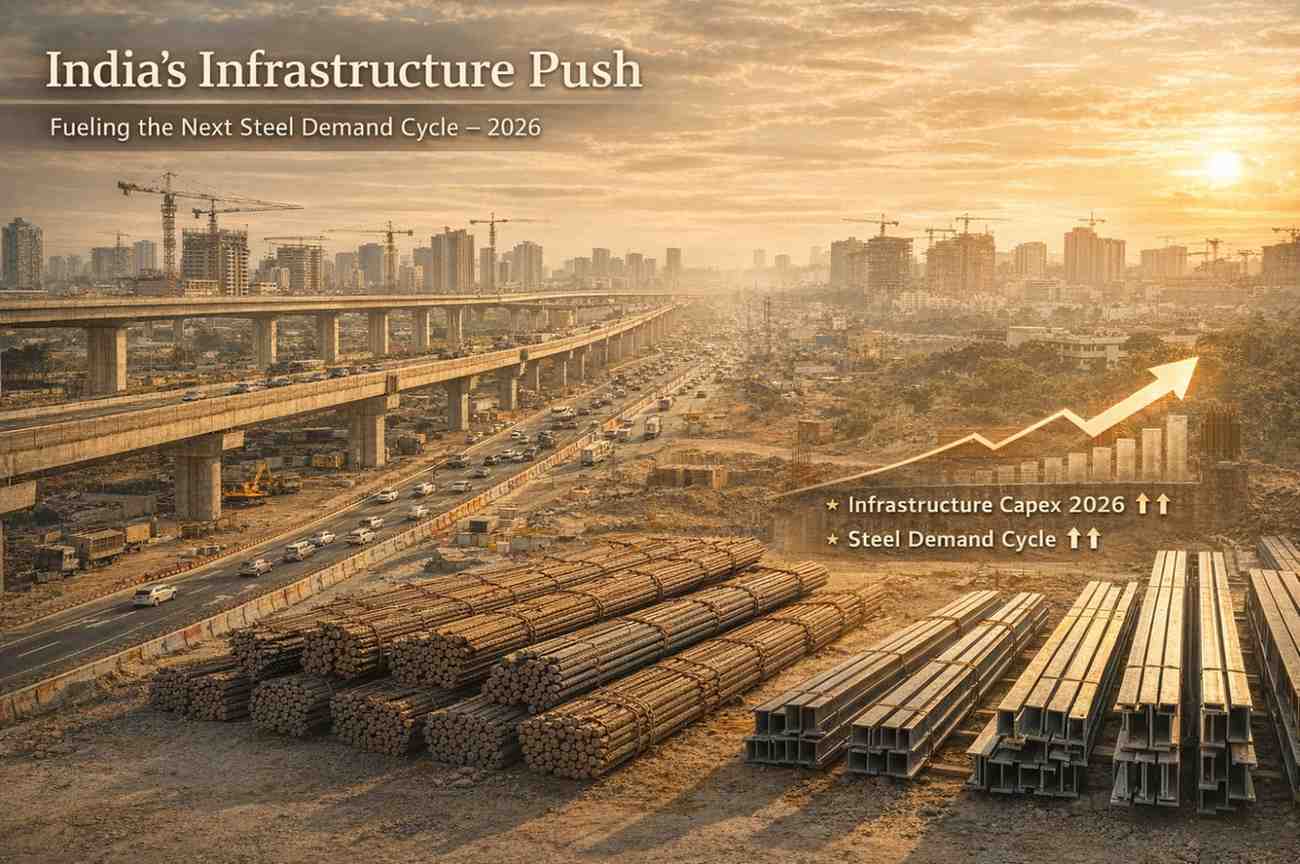
India’s infrastructure sector is entering a decisive expansion phase. Government-led capital expenditure, private sector investments, urbanization pressures, and logistics modernization are collectively creating what industry analysts describe as the next structural steel demand cycle.
Unlike previous commodity-driven booms, the upcoming cycle is expected to be policy-driven, long-term, and quality-focused, which has significant implications for steel producers, distributors, and construction stakeholders.
For businesses operating in construction and manufacturing ecosystems, understanding these structural demand shifts is critical to planning procurement, pricing strategy, and project timelines.
Infrastructure Spending Is the Primary Growth Engine
India’s infrastructure pipeline continues to expand across multiple sectors:
Expressways and highways
Rail freight corridors
Metro rail networks
Renewable energy installations
Industrial corridors
Smart cities and urban housing
Ports and logistics hubs
Large-scale infrastructure projects consume massive volumes of reinforcement steel, structural steel, and fabricated components, directly influencing market demand cycles.
This sustained investment environment reduces volatility compared to previous cycles that were heavily dependent on global commodity fluctuations.
Why Steel Demand Is Expected to Rise Sharply
Several structural factors support long-term demand growth:
1. Urbanization Acceleration
India continues to urbanize rapidly, increasing demand for residential, commercial, and transportation infrastructure.
2. Manufacturing Expansion
Government initiatives encouraging domestic manufacturing are increasing industrial construction activity, which requires significant steel consumption.
3. Energy Transition Projects
Solar parks, transmission infrastructure, and energy storage projects rely heavily on steel structures.
4. Logistics Modernization
Warehousing, cold storage, and freight infrastructure are emerging as new steel demand drivers.
Green steel is no longer the future - it’s becoming the present.
— SG Mart (@sgmart_official) February 17, 2026
Carbon regulations may soon influence steel prices, project budgets, and procurement decisions across India’s construction sector.
Full insights 👇https://t.co/c4OEN2SRQB#Steel #GreenSteel #AdaniInvests100Bn pic.twitter.com/DgekZOph6z
Impact on Steel Prices and Procurement Strategy
A rising demand environment typically creates:
Price volatility cycles
Raw material cost pressures
Supply chain disruptions
Regional price variations
For contractors and developers, monitoring TMT Bar Prices becomes essential for project budgeting accuracy.
Instead of focusing only on short-term price fluctuations, procurement teams are increasingly evaluating:
Supplier reliability
Quality consistency
Certification compliance
Delivery capability
This shift is gradually moving the market from price-driven purchasing to value-driven procurement.
Quality Will Matter More Than Ever
As infrastructure projects become more complex and compliance standards increase, material quality risk becomes a critical factor.
Choosing certified TMT Steel Bars from reliable suppliers reduces:
Structural risk
Maintenance costs
Lifecycle expenses
Insurance concerns
Project delays
Developers, engineers, and institutional investors are becoming more cautious about sourcing decisions, especially for large projects.
For buyers evaluating options, industry comparisons such as Top 10 TMT Bars in India can provide useful reference points when assessing suppliers.
The Role of Steel Distributors in the New Demand Cycle
Distributors are no longer just supply intermediaries.
They are evolving into:
Supply chain stabilizers
Technical advisors
Inventory risk managers
Logistics partners
Reliable distributors with strong sourcing networks will benefit significantly from the upcoming demand expansion.
Long-Term Outlook: A Multi-Year Opportunity
Most infrastructure cycles historically last between 5–10 years.
India’s current investment trajectory suggests:
Sustained steel demand growth
Increased capacity utilization
More organized supply chains
Higher quality expectations
Consolidation among suppliers
Companies that position themselves early with strong procurement strategies and reliable supply partnerships will gain the most advantage.
Conclusion
India’s infrastructure expansion is not a temporary stimulus — it represents a structural transformation that will redefine steel demand over the coming decade.
For construction stakeholders, success will depend on:
Understanding demand cycles
Managing procurement risks
Prioritizing quality materials
Partnering with reliable suppliers
The next steel growth phase has already begun — and those who prepare early will lead the market.
