

Israel–Iran War and the Global Economy: What It Means for Steel, Infrastructure, and Construction Markets
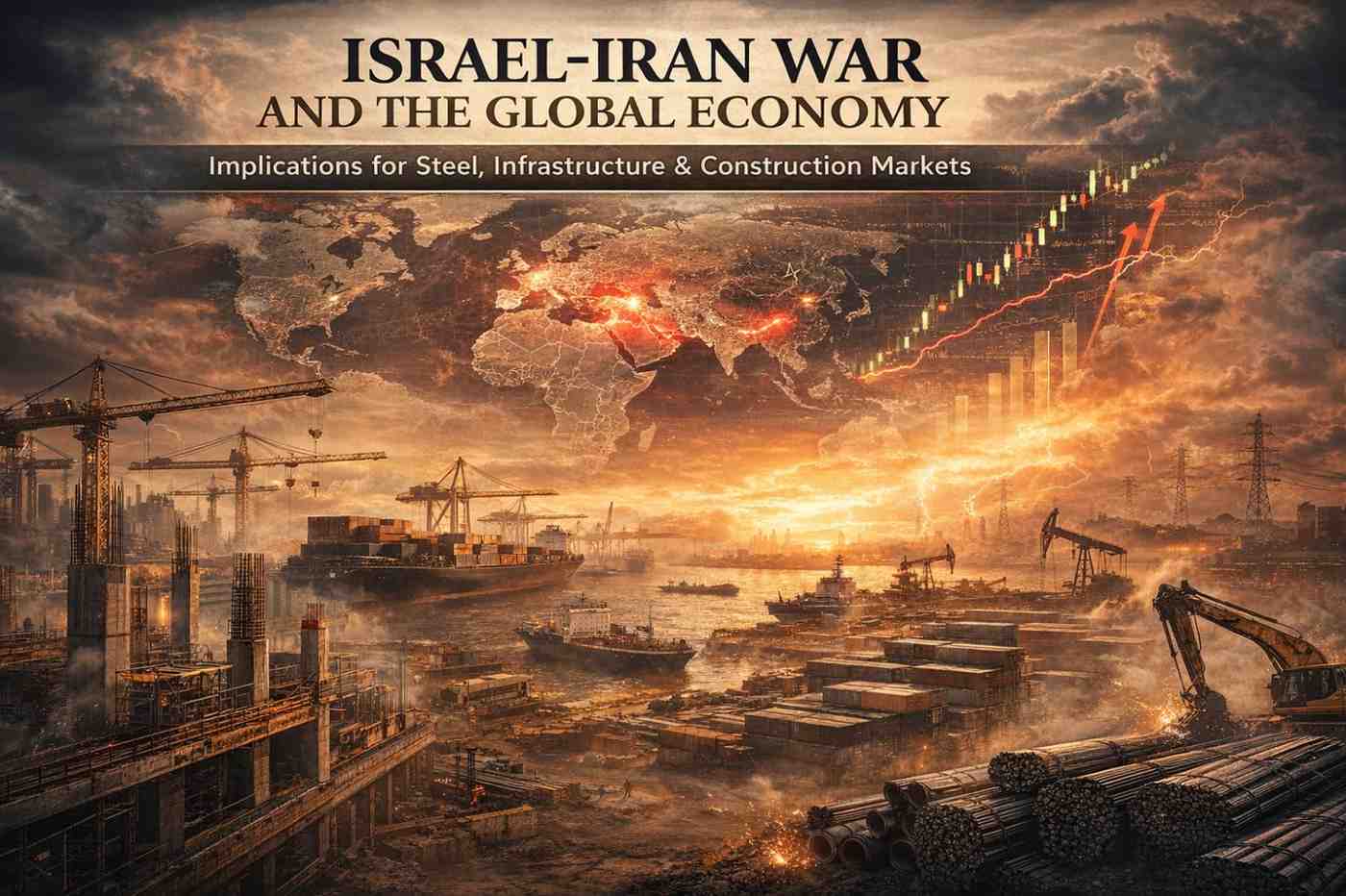
Geopolitical conflicts rarely stay confined to the battlefield. In today’s interconnected global economy, wars often ripple through supply chains, commodity markets, energy prices, and infrastructure investments worldwide.
The recent escalation between Israel and Iran has quickly become one of the most significant geopolitical events impacting global business in 2026. Beyond military tensions, the conflict is creating uncertainty in oil markets, shipping routes, global trade, and manufacturing supply chains.
For industries tied to infrastructure development—such as steel, construction, and engineering—the consequences could be profound.
This article explores how the ongoing Israel–Iran war could reshape global business conditions and influence steel demand, construction costs, and infrastructure projects in the coming months.
The Strategic Importance of the Middle East in Global Trade
The Middle East sits at the center of some of the world’s most important energy and trade routes. One of the most critical chokepoints is the Strait of Hormuz, through which a significant portion of global oil shipments pass.
Any disruption to this corridor immediately affects global energy markets.
Recent tensions have already raised concerns that shipping through the strait could be disrupted, creating volatility in global oil supply and freight logistics. Around 20% of the world’s oil and LNG shipments transit through this route, making it a critical artery for global trade.
As geopolitical risks rise, energy traders, shipping companies, and manufacturers are closely watching developments in the region.
Rising Oil Prices: The First Shock to the Global Economy
The most immediate economic impact of the conflict has been volatility in oil prices.
Even a moderate disruption in Middle Eastern supply could push global crude prices significantly higher. Analysts warn that in severe scenarios, oil prices could climb above $100 per barrel, which historically triggers inflationary pressure across economies.
Recent reports suggest that disruptions to shipping routes and tanker traffic are already pushing energy markets upward and creating uncertainty for global trade.
Higher oil prices affect nearly every sector of the economy because energy is a core input for:
transportation
manufacturing
construction
logistics
heavy industry
When fuel costs rise, businesses across supply chains experience higher operational expenses.
Supply Chain Disruptions and Shipping Costs
The Israel–Iran conflict is also affecting international supply chains.
Military tensions in the Middle East are increasing shipping insurance costs, freight charges, and transit risks for cargo vessels. Analysts warn that disruptions could raise global shipping costs dramatically over time, especially if maritime routes remain unstable.
Some energy shipments and tanker routes have already been disrupted as companies assess alternative logistics corridors.
For global manufacturers, this could lead to:
delayed shipments of raw materials
higher import costs
increased uncertainty in procurement planning
These disruptions often ripple across industries—from automotive manufacturing to construction materials.
How the Conflict Impacts the Global Steel Industry
While energy markets react first to geopolitical conflicts, the steel industry often experiences second-order effects.
Steel production relies heavily on energy, transportation, and raw materials such as iron ore and coking coal. When oil prices rise and shipping becomes more expensive, steel production costs tend to increase.
There are several ways the Israel–Iran conflict could influence global steel markets:
1. Higher Production Costs
Steel manufacturing is energy-intensive. Rising oil and gas prices can increase the cost of:
mining operations
transportation of raw materials
blast furnace operations
electricity for rolling mills
As production costs rise, steel prices often follow.
2. Supply Chain Instability
Global steel supply chains rely on stable shipping routes. Disruptions in Middle Eastern maritime corridors could affect the movement of:
iron ore shipments
coal exports
finished steel products
Logistics disruptions may tighten supply in certain regions.
3. Infrastructure Spending Shifts
Historically, geopolitical instability often pushes governments to increase domestic infrastructure investment to support economic growth.
In emerging economies such as India, infrastructure spending is a major driver of steel demand. If global economic uncertainty rises, governments may accelerate infrastructure projects to maintain economic momentum.
Steel demand isn’t just a local issue —it’s a global economic signal. 🌍
— SG Mart (@sgmart_official) February 26, 2026
From infrastructure projects to urban growth, rising demand directly impacts construction costs worldwide.
Understanding trends today helps build smarter tomorrow.https://t.co/GkeUJt23Zc#Infrastructure pic.twitter.com/I8alPSV5Ny
Impact on Construction and Infrastructure Costs
Construction projects are highly sensitive to fluctuations in raw material prices.
If the conflict leads to sustained increases in:
energy costs
steel prices
transportation expenses
then infrastructure and real estate projects could face rising budgets.
For developers and contractors, this could mean:
higher procurement costs for structural steel and reinforcement bars
delays in project execution
revised cost estimates for large infrastructure projects
For companies involved in supplying construction materials—especially steel products such as TMT bars—market volatility often creates both challenges and opportunities.
What It Means for Emerging Markets Like India
Countries that rely heavily on imported energy are particularly vulnerable to Middle Eastern instability.
India imports a large portion of its crude oil, so rising oil prices could increase the national import bill and contribute to inflationary pressure.
Higher fuel costs can affect:
transportation
infrastructure budgets
However, India’s strong infrastructure push—including highways, railways, and urban development—may continue supporting domestic steel demand despite global uncertainty.
The Bigger Picture: Geopolitics and the Future of Global Trade
The Israel–Iran war highlights how geopolitical events can reshape economic realities across industries.
From energy markets to manufacturing supply chains, the ripple effects of geopolitical tensions are increasingly global.
For businesses operating in steel, infrastructure, and construction sectors, the key priorities in the coming months will include:
monitoring commodity price trends
managing supply chain risks
adjusting procurement strategies
preparing for potential market volatility
Companies that remain agile and data-driven in their decision-making will be better positioned to navigate these uncertain conditions.
Conclusion
The ongoing conflict between Israel and Iran is not only a geopolitical event—it is also a potential economic shockwave for global markets.
Energy prices, shipping routes, and supply chains are already feeling the impact, and industries tied to infrastructure development—especially steel and construction—could see further consequences in the months ahead.
While uncertainty remains high, one thing is clear: in a globalized economy, geopolitical stability plays a critical role in shaping the cost of building the world’s infrastructure.
For businesses involved in steel supply, construction materials, and infrastructure development, understanding these macroeconomic shifts is essential to staying competitive in a rapidly changing global market.
