


Oil Prices, War & Steel Prices: Why Global Conflicts Increase Construction Costs
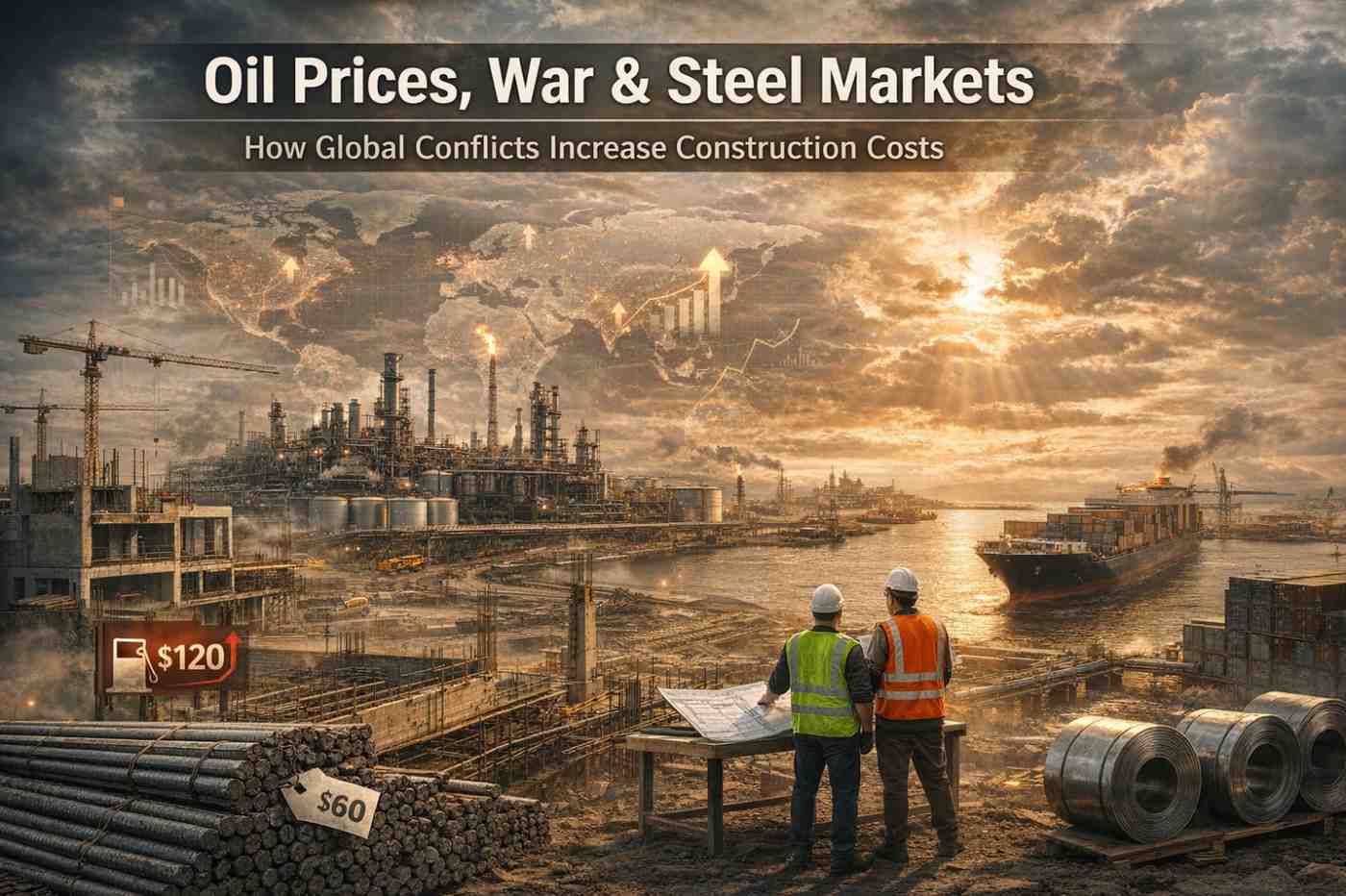
In a globalized economy, geopolitical conflicts rarely remain limited to politics or military strategy. Instead, they often ripple through international trade, commodity markets, and industrial supply chains. One of the most immediate economic consequences of global conflicts is volatility in oil prices — and this volatility can significantly impact industries that rely heavily on energy and transportation.
Rising oil prices during global conflicts often increase steel production costs and transportation expenses. Since steel manufacturing depends heavily on energy and logistics, higher fuel prices can lead to increased steel prices, which ultimately raise construction and infrastructure project costs worldwide.
For the construction and infrastructure sectors, the relationship between oil prices and steel production is particularly important. Steel remains the backbone of modern infrastructure, and fluctuations in energy markets can influence everything from manufacturing costs to construction project budgets.
Understanding how global conflicts affect oil markets — and how those changes translate into steel price movements — is essential for developers, contractors, and businesses involved in the construction supply chain.
Why Oil Prices Matter for the Steel Industry
Steel manufacturing is one of the most energy-intensive industrial processes in the world. Producing steel requires large amounts of electricity, fuel, and raw material transportation. When oil prices rise, the cost of operating these processes typically increases.
Several stages of steel production depend directly or indirectly on energy markets:
Mining and extraction of iron ore and coking coal
Transportation of raw materials to steel plants
Operation of blast furnaces and electric arc furnaces
Rolling, processing, and fabrication of finished steel products
Energy and fuel costs therefore play a critical role in determining the overall cost structure of steel production.
When oil prices increase sharply — often due to geopolitical tensions — steel manufacturers face higher operating expenses that can ultimately push steel prices upward.
How Oil Price Spikes Increase Steel Production Costs
When global conflicts disrupt oil supply chains or create uncertainty in energy markets, crude oil prices can rise rapidly. This increase affects multiple layers of the steel supply chain.
1. Transportation Costs
Steel production relies on the movement of massive quantities of raw materials. Iron ore, coal, and finished steel products are transported via ships, trains, and trucks across international markets.
Higher fuel prices directly increase the cost of:
shipping iron ore and coal
transporting steel coils and reinforcement bars
delivering construction materials to project sites
These rising logistics costs are often reflected in steel market pricing.
2. Energy Consumption in Manufacturing
Steel plants require enormous amounts of energy to operate blast furnaces, smelting equipment, and rolling mills.
When oil and natural gas prices rise, electricity generation and industrial fuel costs increase as well. This pushes up the operational expenses for steel producers.
3. Global Freight and Shipping Costs
International shipping is heavily dependent on fuel prices. During periods of geopolitical tension, shipping companies often face higher insurance premiums and operational risks.
This can lead to higher freight costs for global commodity trade — including steel and its raw materials.
Global Conflicts That Historically Raised Steel Prices
History shows that geopolitical crises frequently trigger volatility in energy and commodity markets. When energy costs surge, steel production becomes more expensive.
Several major global conflicts have demonstrated this pattern:
Gulf War (1990–1991)
The conflict in the Middle East caused a sharp rise in oil prices, which increased transportation and industrial energy costs worldwide. Many manufacturing sectors experienced cost pressures during this period.
Russia–Ukraine Conflict (2022)
The war significantly disrupted energy supplies in Europe and global commodity markets. Energy price spikes contributed to rising steel production costs and volatility in global steel prices.
Current Middle East Tensions
Recent geopolitical tensions in the Middle East have again raised concerns about potential disruptions to global oil supply routes. Markets often respond quickly to such risks, causing fluctuations in energy prices and industrial commodities.
Builders often track TMT Bar Prices closely during periods of global commodity volatility.
Impact on Construction and Infrastructure Projects
Steel is one of the most widely used materials in construction, particularly for infrastructure, commercial buildings, and residential developments.
When steel prices increase due to rising energy costs, construction companies often face higher procurement expenses.
Key impacts may include:
Increased budgets for infrastructure projects
Higher costs for structural steel and reinforcement bars
Delays in project planning due to price volatility
Revisions to procurement strategies for contractors and developers
Large infrastructure projects — such as highways, bridges, railways, and industrial facilities — are especially sensitive to fluctuations in steel prices.
What It Means for India’s Steel and Construction Market
For emerging economies with large infrastructure ambitions, energy market fluctuations can play a significant role in shaping construction costs.
India continues to invest heavily in infrastructure development, including transportation networks, urban expansion, and industrial corridors. These projects require massive quantities of construction steel.
If global oil prices remain volatile due to geopolitical tensions, the Indian construction sector may experience:
increased logistics costs
higher steel production expenses
fluctuations in construction material prices
However, strong domestic infrastructure demand can also support stable steel consumption even during periods of global economic uncertainty.
Geopolitical tensions are transforming global #SupplyChain.
— SG Mart (@sgmart_official) March 7, 2026
From energy disruptions to industrial material shortages, businesses are rethinking sourcing strategies and supply networks.
Read our latest analysis on the future of industrial markets.https://t.co/51tkvOw8ey#Global pic.twitter.com/G1z2Bt5X7j
Strategic Advice for Builders, Contractors, and Developers
For businesses operating in construction and infrastructure sectors, monitoring global commodity markets is becoming increasingly important.
Contractors and developers may benefit from adopting proactive procurement strategies, such as:
monitoring global energy price trends
planning steel procurement in advance
maintaining relationships with reliable steel suppliers
evaluating long-term material sourcing strategies
In volatile markets, businesses that anticipate price fluctuations and adjust procurement strategies accordingly are often better positioned to manage project costs.
Conclusion
The connection between oil prices, geopolitical conflicts, and steel markets highlights how deeply interconnected the global economy has become.
When global conflicts disrupt energy markets, the effects often extend far beyond the oil sector. Rising fuel prices increase transportation costs, raise industrial energy expenses, and ultimately influence steel production costs.
For the construction and infrastructure industries, these changes can translate directly into higher project budgets and shifting procurement strategies.
As geopolitical uncertainty continues to shape global markets, businesses involved in steel supply, infrastructure development, and construction must remain attentive to the broader economic forces influencing commodity prices and supply chains.
Understanding these connections is essential for navigating the evolving dynamics of the global construction and steel markets.
