


What Differentiates Reliable Solar Structure Manufacturers
Not all solar structure manufacturers operate at the same engineering standard. In recent years, experienced developers have started prioritizing manufacturers who demonstrate:
In-house design and load calculation capability
High-precision steel fabrication
Consistent galvanization or coating quality
Documented testing and compliance standards
This shift reflects a maturing solar ecosystem — where structural reliability directly influences ROI.
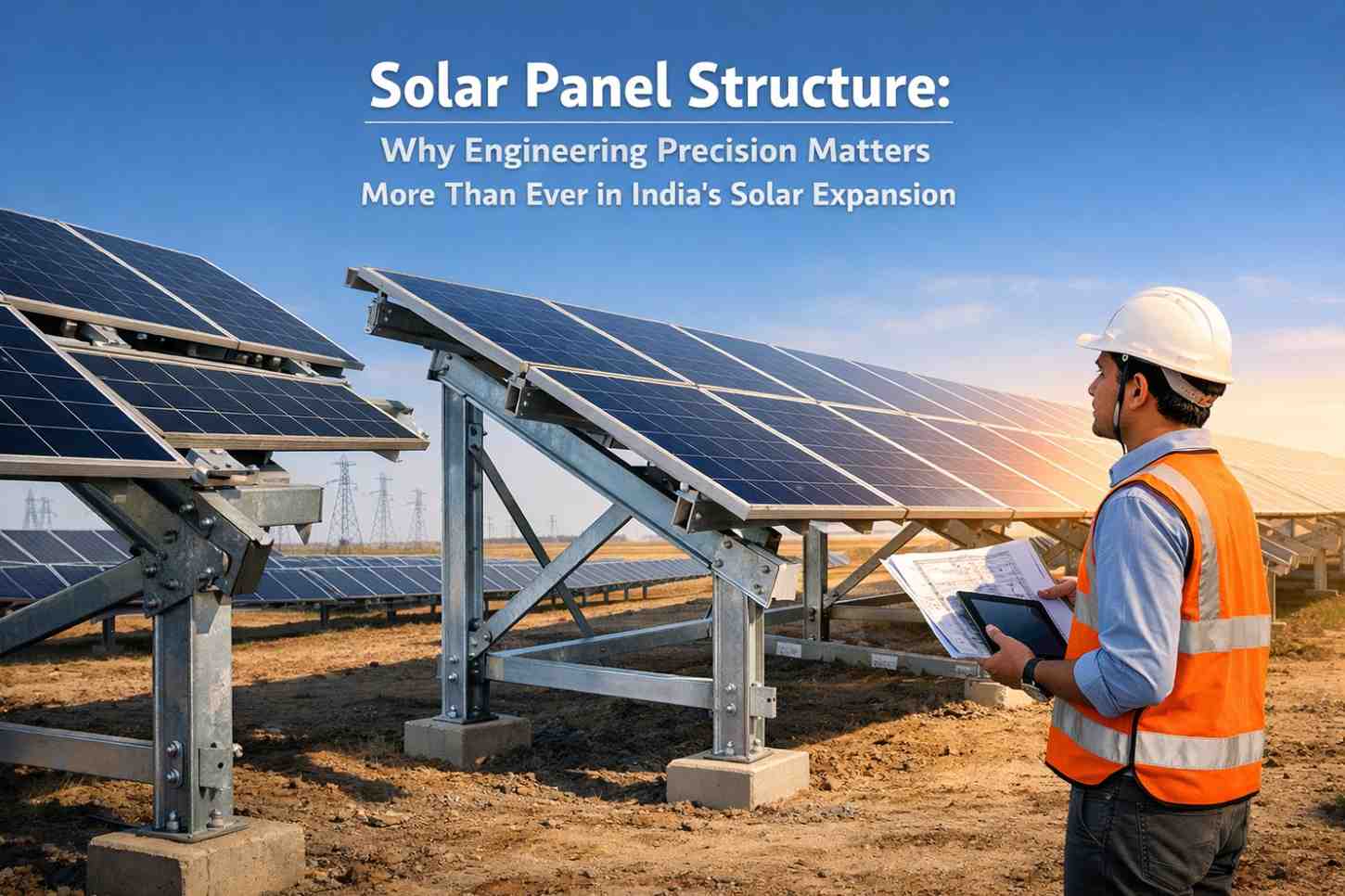
Steel Quality: The Hidden Variable in Solar Structure Longevity
The performance of a solar structure is only as strong as the steel behind it. Inferior steel can lead to:
Micro-cracking under thermal stress
Premature corrosion
Alignment drift affecting panel efficiency
Modern solar projects increasingly prefer high-strength, precision-processed steel structures — a trend influenced by India’s evolving steel manufacturing capabilities and stricter project warranties.
Why Documentation & Transparency Matter
Developers today expect clear technical documentation, including:
Structural drawings and load calculations
Installation guidelines
Maintenance considerations
This transparency improves on-site execution and reduces long-term risk — especially in large-scale deployments where structural failure can impact thousands of modules.
Solar Structures in the Broader Energy Transition
As India moves toward its renewable targets, solar mounting systems are no longer secondary components. They are part of a critical infrastructure ecosystem supporting grid stability, energy security, and decarbonization goals.
From industrial rooftops to megawatt-scale solar parks, the conversation is shifting from “lowest cost” to “best lifecycle performance” — and the solar panel structure sits at the center of that shift.
Final Perspective: Building Solar for the Long Term
The next phase of India’s solar growth will be defined not just by how many panels we install, but how intelligently we support them.
For EPCs, developers, and infrastructure planners, investing in well-engineered solar structures is no longer a design preference — it is a strategic decision that determines project resilience, efficiency, and credibility.
As the industry matures, solar structure engineering will continue to separate short-term installations from truly sustainable energy assets.
 Reference (Technical Brochure)
For those evaluating structural design parameters and manufacturing approaches in detail, technical catalogues such as:
APL Apollo Sun Steel Solar Mounting Structure Catalogue (PDF)
provide insight into current engineering practices and material specifications.

Pingback: Solar Structures in 2025: Installation Challenges & What EPCs Must Fix
Pingback: How EPCs Redesign Solar Structures for 25-Year Reliability