
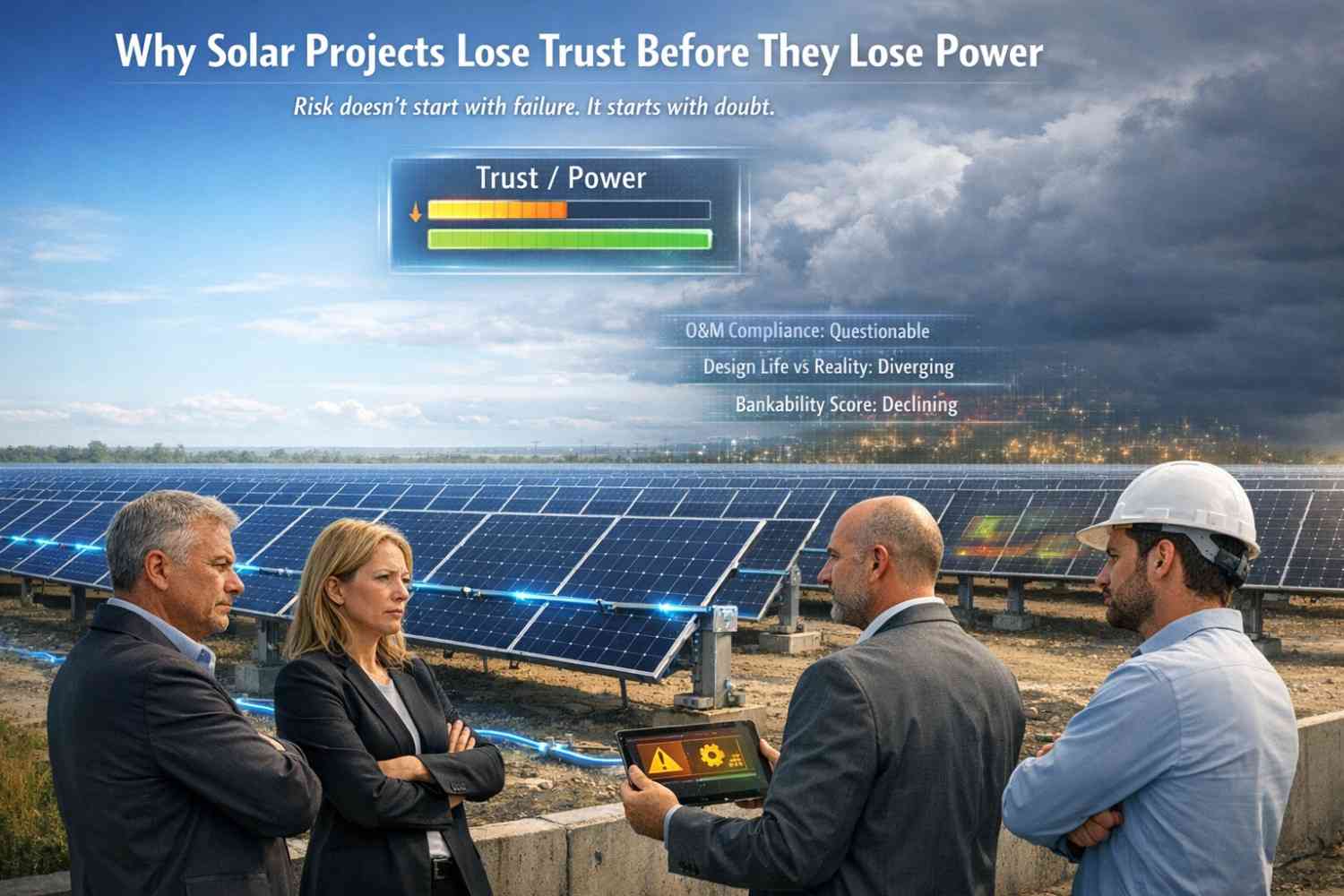
Why Solar Projects Lose Trust Before They Lose Power

solar project

How Structural Decisions, O&M Discipline, and Documentation Shape Long-Term Asset Credibility

In the solar industry, project success is often measured in megawatts commissioned and units generated. But long before a solar plant loses power, it can lose something far more critical — trust. Trust from insurers, lenders, auditors, and eventually, buyers.

This loss of trust does not happen overnight. It unfolds quietly, through unanswered questions, incomplete records, and small technical compromises that accumulate over time. A project may continue generating electricity, yet still struggle to secure insurance renewals, favorable refinancing terms, or confident valuations.

Understanding why this happens requires looking beyond generation curves and into how solar assets age in reality.

To understand how structural design, material selection, and corrosion control directly influence long-term asset confidence, refer to our Solar Mounting Structure Engineering & Risk Assessment Guide — a technical reference widely used by EPCs and asset evaluators.

Why Performance Alone Is No Longer Enough

In the early years of a solar project, performance data dominates discussions. If output matches projections, stakeholders remain comfortable. However, as projects mature, the conversation shifts. Financial institutions and insurers begin asking different questions.

How has the structure behaved over time?
Are corrosion risks under control?
Is maintenance documented or assumed?

At this stage, generation becomes only one part of a broader credibility assessment. Projects that cannot answer these questions clearly begin to face friction — not because they are failing, but because they cannot demonstrate reliability.

Structural Integrity as a Trust Signal

Solar mounting structures form the physical backbone of a project. They absorb environmental loads, protect modules, and maintain alignment year after year. Yet once commissioned, they often fade into the background of operational priorities.

Over time, even minor structural neglect can weaken confidence. Surface corrosion, undocumented repairs, or unclear load reassessments raise doubts about long-term stability. These doubts don’t require visible damage to matter. In risk evaluation, uncertainty itself is a cost.

👉solar mounting structure design decisions

Projects that proactively monitor and document structural health signal seriousness. Those that do not leave stakeholders guessing — and guessing is rarely rewarded.

O&M Discipline: The Difference Between Aging and Deterioration

All solar assets age. Not all deteriorate at the same rate.

The difference lies in operational discipline. Preventive inspections, torque checks, corrosion monitoring, and timely corrective actions slow down degradation. Reactive maintenance, on the other hand, allows small issues to compound silently.

👉O&M discipline over 25-year lifecycle

When O&M is treated as a checkbox activity, structural and mechanical risks increase gradually. By the time these risks are noticed, they often require disproportionate effort to correct. More importantly, they become difficult to explain retrospectively.

Documentation: The Invisible Asset Everyone Forgets

Documentation rarely feels urgent — until it becomes essential.

Inspection records, maintenance logs, photographic evidence, and corrective action reports form the narrative of a project’s life. Without them, even well-maintained assets struggle to prove their history. Insurers hesitate. Auditors probe deeper. Lenders apply conservative assumptions.

In contrast, projects with clear documentation don’t just manage assets better — they manage perception better. They can explain what was done, why it was done, and how risks were controlled. This clarity builds confidence far beyond technical teams.
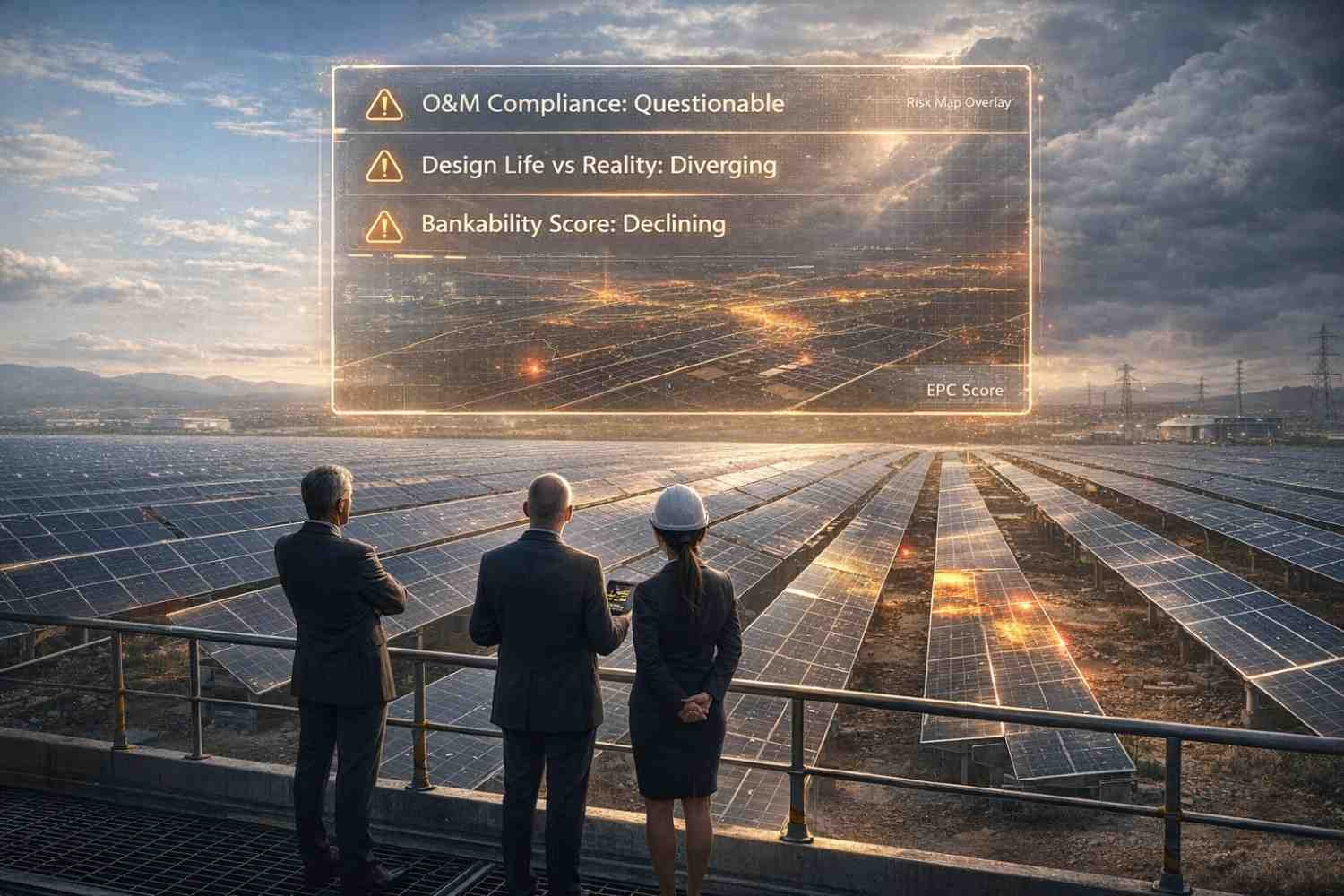
How Trust Erosion Shows Up Financially

Loss of trust rarely appears as a single rejection. It manifests as small but persistent resistance.

Insurance renewals come with exclusions.
Refinancing discussions stretch longer than expected.
Valuations include higher risk buffers.

None of these outcomes mean the project is broken. They indicate that stakeholders are uncertain — and uncertainty has a price.

Over time, these costs add up, quietly reducing the economic flexibility of the asset.

Why Strong Projects Feel “Boring” to Stakeholders

The most trusted solar projects rarely attract attention. Their insurance renewals are routine. Their audits are uneventful. Their refinancing discussions are predictable.

This “boring” stability is not accidental. It is the result of consistent structural decisions, disciplined O&M practices, and strong documentation culture. These projects don’t rely on optimism; they rely on evidence.

In an industry maturing beyond installation speed, this predictability has become a competitive advantage.

solar project trust

Building Trust Is Easier Than Rebuilding It

Once trust erodes, rebuilding it is expensive. Retrofitting structures, conducting special audits, or renegotiating contracts consumes time and capital. More importantly, it shifts focus from growth to damage control.

Projects that invest early in structural quality, maintenance discipline, and documentation avoid this trap. They remain flexible — able to extend life, repower strategically, refinance smoothly, or exit confidently.

Conclusion

Solar projects rarely fail because they stop generating power. They fail when stakeholders stop believing in their long-term reliability.

Structure, O&M, and documentation form the foundation of that belief. Together, they decide whether a solar asset ages with dignity or struggles under scrutiny.

As the industry evolves, success will belong to projects that understand this shift — and build not just for performance, but for trust.

Leave a Comment

Your email address will not be published. Required fields are marked *

Scroll to Top