


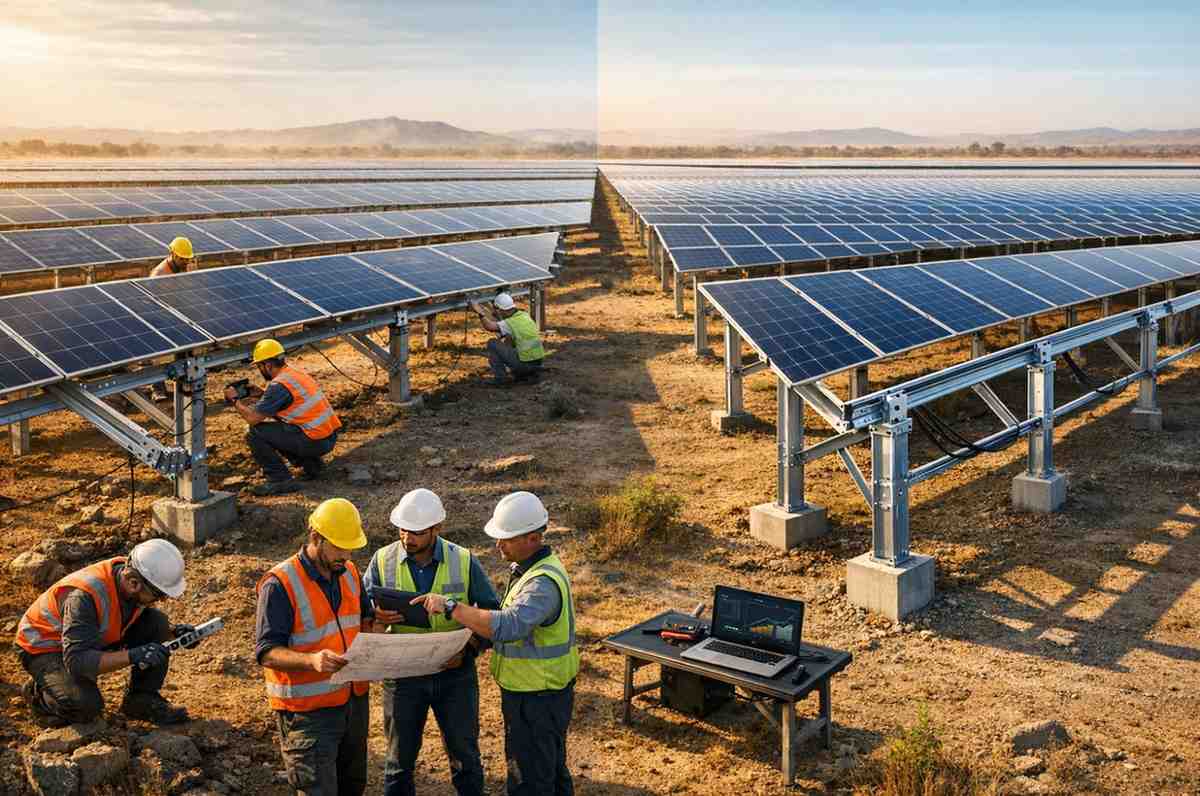
In our previous article, we discussed how solar mounting structures form the backbone of any photovoltaic project, directly influencing safety, efficiency, and lifecycle costs. As India accelerates its renewable energy targets in 2025, the conversation around solar structures is evolving beyond design and material selection.
This follow-up article focuses on post-installation realities, ground-level challenges faced by EPC contractors, and what developers must reassess to ensure long-term performance of solar panel structures across diverse Indian conditions.
1. Why Solar Structure Performance Is Being Questioned Post-Installation
Over the last 12–18 months, several solar developers have reported unexpected issues after commissioning, including:
-
Frame deformation during peak summer heat
-
Loose joints after monsoon cycles
-
Corrosion appearing earlier than projected lifecycle
-
Increased maintenance costs due to alignment shifts
These challenges are rarely caused by solar modules themselves. In most cases, solar module mounting structures and their interaction with environment and load conditions are the real stress points.
2. India’s Climate Diversity Is Redefining Solar Structure Engineering
Unlike markets with uniform climate zones, India presents extreme variations:
-
High wind zones (coastal Gujarat, Tamil Nadu)
-
High-temperature zones (Rajasthan, central India)
-
High humidity & corrosion zones (eastern & coastal belts)
-
Dust-intensive regions (arid & semi-arid zones)
A solar structure design that performs well in one zone may underperform in another if steel grade selection, coating thickness, or structural tolerance is not optimized.
This is why developers are increasingly evaluating solar structure manufacturers not just on pricing, but on region-specific engineering capability.
3. Steel Quality: The Hidden Variable in Solar Structure Longevity
One of the most overlooked aspects in solar projects is steel consistency across batches.
Ground feedback from EPC firms highlights that:
-
Minor deviations in steel chemistry affect weld integrity
-
Inconsistent section thickness impacts load distribution
-
Poor galvanization uniformity accelerates corrosion
High-quality structural steel, similar to what is used in infrastructure-grade applications, is now becoming a benchmark requirement for solar mounting systems — especially for utility-scale plants with 25+ year performance expectations.
4. Welding, Fastening & On-Site Assembly: Small Gaps, Big Consequences
Even a well-designed solar structure can fail prematurely if on-site fabrication practices are weak.
Common issues observed on Indian solar sites include:
-
Improper welding electrode selection leading to brittle joints
-
Over-tightening or under-tightening of fasteners
-
Temporary fixes during installation becoming permanent stress points
As a result, EPC contractors are paying closer attention to welding rods, fasteners, and binding materials used during installation — not just the primary structure.
This shift reflects a broader industry move toward system-level quality control, rather than component-level procurement.
5. Cost Pressure vs Lifecycle Cost: A Strategic Shift in 2025
While cost optimization remains important, developers are slowly moving away from lowest-bid procurement for solar structures.
Why?
Because post-installation repairs, reinforcement work, and downtime can cost significantly more than the initial savings.
In 2025, the smarter question EPCs are asking is:
“What is the total lifecycle cost of this solar structure over 25 years?”
This includes:
Structural maintenance
Replacement risks
Compliance with future safety audits
Insurance & financing scrutiny
6. Compliance, Audits & Financing: A New Layer of Accountability
Another emerging trend is third-party audits and stricter documentation requirements from lenders and institutional investors.
Solar structure documentation now often requires:
Steel test certificates
Coating thickness reports
Load calculation summaries
Welding procedure specifications
This has pushed the industry toward organized, process-driven solar structure manufacturers, rather than fragmented supply chains.
7. What This Means for the Future of Solar Structures in India
Looking ahead, the solar structure segment is expected to evolve in three key ways:
Standardization across regions, with climate-specific variants
Greater integration of structural steel expertise into solar engineering
Higher entry barriers, favoring manufacturers with strong metallurgical and fabrication background
Solar projects may be modular in appearance, but structurally, they are increasingly being treated like long-term infrastructure assets.
Final Thoughts: Solar Structures Are No Longer “Support Components”
The Indian solar industry is maturing rapidly. With higher capacity plants, tighter timelines, and longer performance guarantees, solar panel structures are no longer secondary considerations.
They are strategic assets — and decisions made at the structure level today will define project stability, safety, and profitability for decades.
As developers, EPC players, and engineers reassess their approach in 2025, one thing is clear:
Strong solar projects begin with stronger structures.
Frequently Asked Questions (FAQs)
A solar mounting structure is the steel framework that supports solar panels. Its design directly affects panel alignment, wind resistance, corrosion life, and overall plant performance. Poor-quality structures often lead to higher maintenance costs over time.
EPCs are dealing with corrosion issues, inconsistent galvanization, structural deformation under wind loads, and higher lifecycle costs—especially in coastal and high-temperature regions.
Reliable solar structure manufacturers ensure quality steel, proper coating, precise fabrication, and compliance with Indian and international standards— all of which improve project longevity and ROI.

Pingback: O&M Failures in Solar Projects | How Maintenance Defines 25-Year Lifecycle