


Global Steel Supply Chain Crisis: Iron Ore, Coal & Energy Impact on Steel Prices
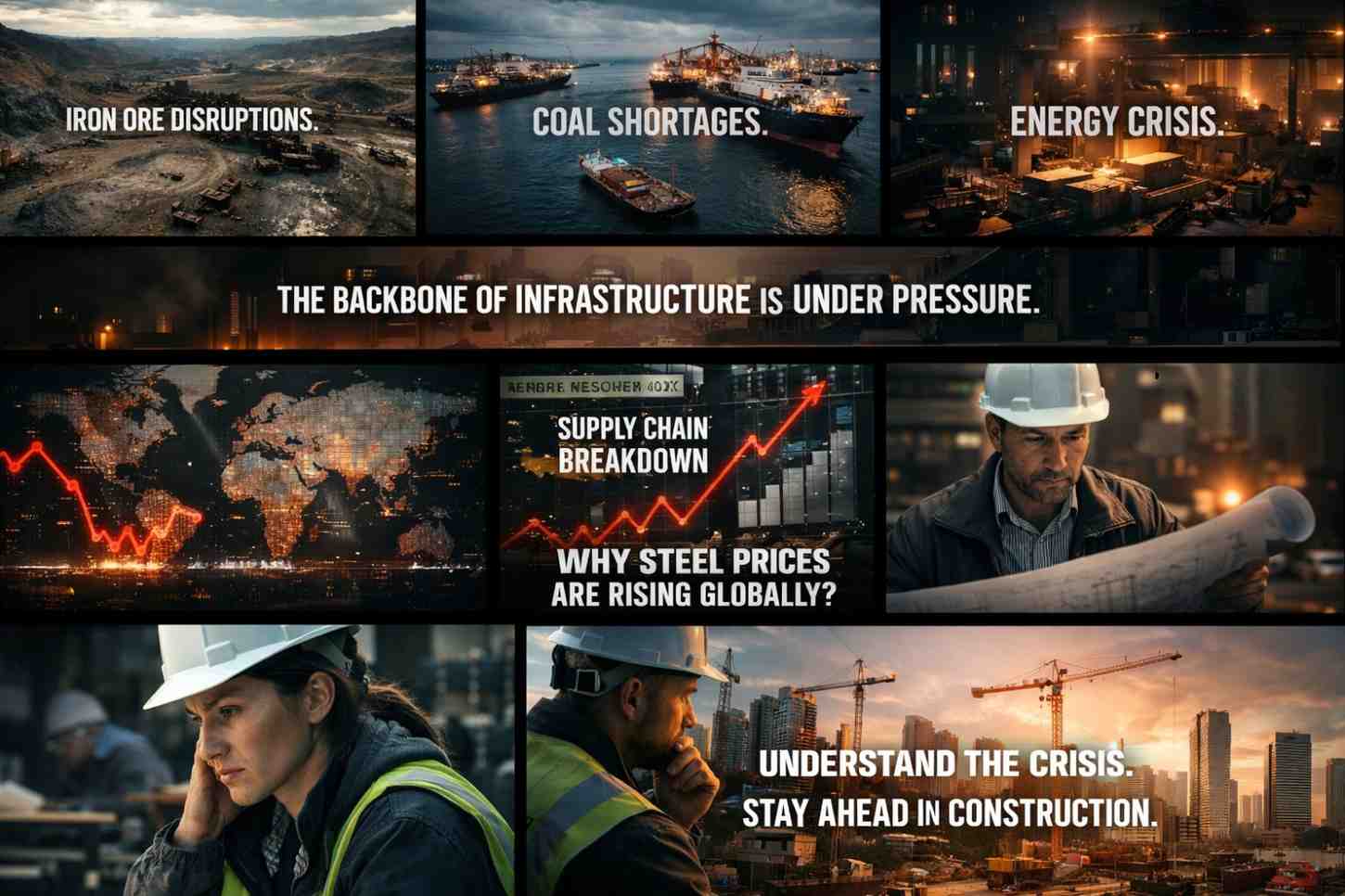
The global steel industry is entering a phase of structural volatility, driven not just by demand cycles but by deeper disruptions in its supply chain. While recent geopolitical tensions have highlighted how conflicts affect global markets, the real pressure on steel prices today comes from a combination of raw material constraints, energy cost fluctuations, and logistics challenges.
The global steel supply chain crisis is driven by disruptions in iron ore, coking coal, and energy markets. These factors increase steel production costs, leading to higher steel prices and rising construction expenses worldwide.
As discussed in our earlier analysis of how the Israel–Iran conflict impacts global trade and steel markets, geopolitical instability often acts as the trigger. However, the long-term impact is usually shaped by supply-side disruptions — particularly in iron ore, coking coal, and energy availability.
To understand why steel prices remain volatile, it is essential to examine the interconnected supply chain that drives steel production.
The Foundation of Steel: Iron Ore and Coking Coal
Steel production depends heavily on two primary raw materials — iron ore and coking coal. Any disruption in their availability or pricing directly affects the cost of manufacturing steel.
Iron Ore Volatility
Iron ore is the backbone of steel production. Major exporting regions such as Australia and Brazil dominate global supply. However, mining disruptions, environmental regulations, and export policies can significantly influence availability.
Even minor supply constraints can create price spikes, especially when global demand remains strong.
Coking Coal Constraints
Coking coal is equally critical, particularly for blast furnace-based steel production. Supply disruptions in major exporting countries or logistics bottlenecks can lead to sudden price increases.
These cost pressures are eventually reflected in finished steel products, including construction-grade materials.
Energy Crisis: The Hidden Driver Behind Steel Prices
Energy is one of the largest cost components in steel manufacturing. From mining operations to final product delivery, energy costs influence every stage of the steel value chain.
As explored in our previous article on how oil prices impact steel prices and construction costs, fluctuations in energy markets directly affect steel production economics.
When oil, gas, or electricity prices rise:
transportation costs increase
manufacturing becomes more expensive
logistics networks become costlier
This creates a cascading effect across the steel supply chain.
Logistics and Global Supply Chain Disruptions
In recent years, global supply chains have faced unprecedented disruptions — from port congestion and shipping delays to rising freight costs.
Steel, being a bulk commodity, is highly sensitive to logistics efficiency. Delays in transporting raw materials or finished goods can:
increase inventory holding costs
disrupt project timelines
create regional price disparities
These disruptions become more severe during geopolitical tensions or trade restrictions.
Why Steel Prices Are Becoming More Volatile
The combination of raw material constraints, energy price fluctuations, and logistics inefficiencies has made steel pricing increasingly unpredictable.
Unlike previous cycles where demand was the primary driver, today’s steel market is heavily influenced by supply-side risks.
This explains why contractors and developers are closely monitoring TMT Bar Prices as part of their procurement strategy.
Even small fluctuations in raw material costs can translate into significant changes in construction budgets.
Oil prices, global conflicts & steel prices are deeply connected.
— SG Mart (@sgmart_official) March 12, 2026
When energy costs rise, steel production and construction costs often follow.
A quick analysis of how global conflicts influence the steel and infrastructure markets.https://t.co/GqJJke13bz#GlobalEconomy pic.twitter.com/LEbad6cs2z
Impact on Construction and Infrastructure Projects
Steel is the backbone of infrastructure development, and any volatility in its pricing directly affects construction economics.
Projects that rely on TMT Steel Bars for structural strength often face budget uncertainties when steel prices fluctuate.
Key impacts include:
increased project costs
delayed procurement decisions
pressure on contractor margins
re-evaluation of project feasibility
In large-scale infrastructure projects, these challenges can significantly influence timelines and investment decisions.
What This Means for India’s Steel Market
India’s infrastructure growth story remains strong, but it is not insulated from global supply chain disruptions.
Rising raw material costs and energy prices can influence domestic steel pricing, even in a demand-driven market.
For builders and developers, tracking TMT Bar Prices becomes critical during such periods of global uncertainty.
Additionally, understanding the broader supply chain dynamics helps businesses make informed procurement decisions rather than reacting to short-term price fluctuations.
Strategic Insight: How Businesses Should Respond
In an environment where steel prices are influenced by global supply chain disruptions, businesses must shift from reactive to proactive strategies.
Key approaches include:
monitoring global commodity trends
planning procurement cycles strategically
working with reliable suppliers
diversifying sourcing channels
Companies that adapt to these changing dynamics are better positioned to manage cost risks and maintain project stability.
Conclusion: A New Era of Steel Market Dynamics
The global steel industry is no longer driven solely by demand cycles. Instead, it is shaped by a complex interplay of raw material availability, energy costs, and supply chain efficiency.
From iron ore and coking coal shortages to rising energy prices and logistics disruptions, every element of the supply chain now plays a critical role in determining steel prices.
When combined with geopolitical uncertainty, these factors create a highly dynamic market environment — one that directly impacts construction costs, infrastructure development, and procurement strategies.
For businesses operating in the steel and construction ecosystem, understanding these supply-side dynamics is no longer optional — it is essential.
