

Structural, O&M, and Documentation Gaps That Block BESS Integration
As battery energy storage systems (BESS) move from pilot projects to mainstream adoption, a growing assumption has entered the solar industry: any operating solar plant can simply add storage.
On paper, the logic feels straightforward. Batteries smooth output, improve grid interaction, enhance bankability, and extend asset relevance. But in practice, many solar assets discover an uncomfortable truth during feasibility studies — they are not structurally, operationally, or procedurally ready for storage integration.
The limitation is rarely the battery technology itself. It is the condition and credibility of the underlying solar asset.
Why “Storage-Ready” Is Not a Given
Storage integration fundamentally changes how a solar plant behaves. It introduces new load paths, new operational cycles, additional safety requirements, and higher scrutiny from lenders, insurers, and regulators.
For newer projects, this transition can be planned.
For existing assets, it often becomes a stress test — one that exposes hidden weaknesses built up quietly over years.
What blocks BESS integration is not ambition. It is risk.
Structural Readiness: The First Reality Check
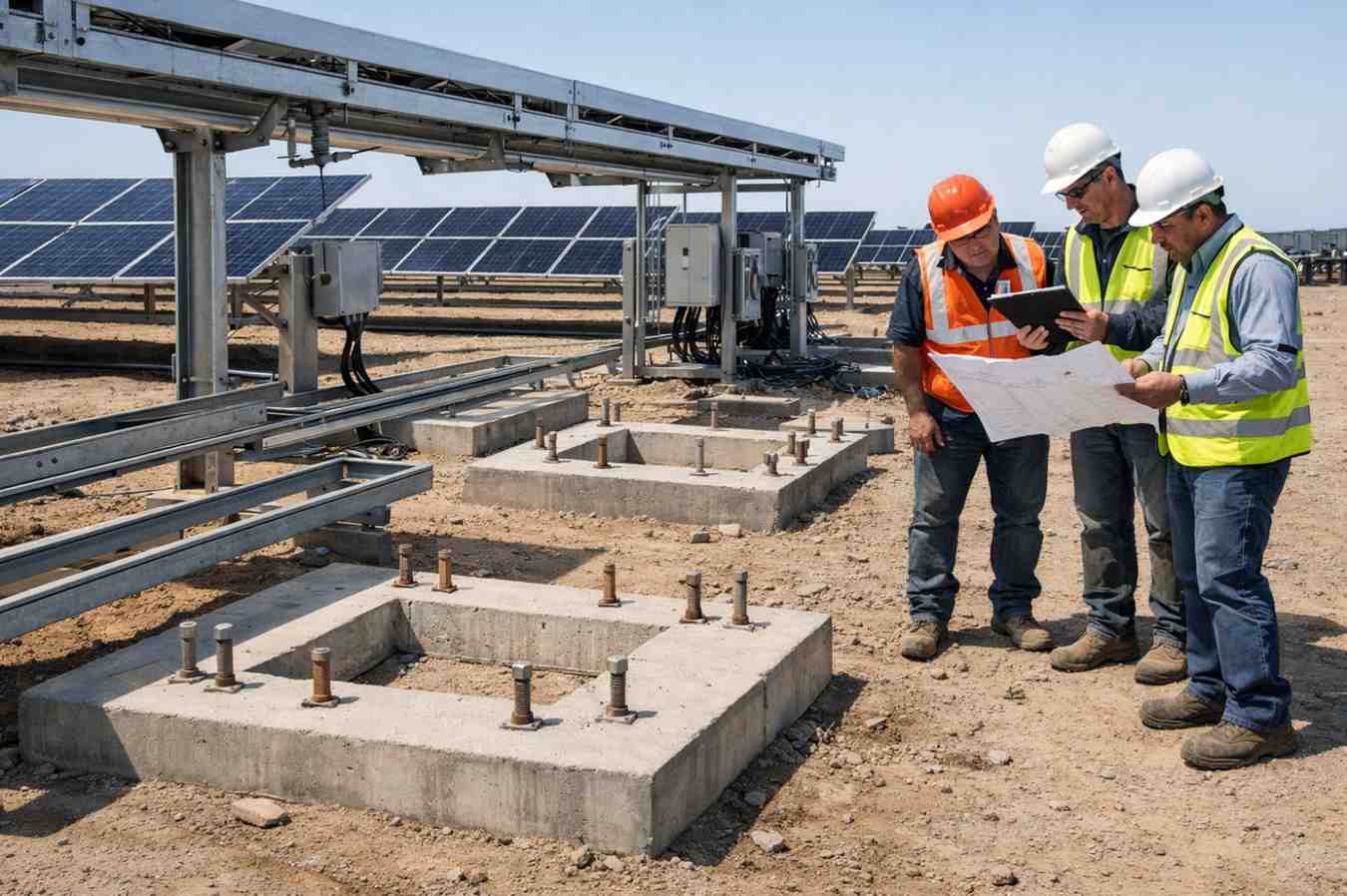
BESS adds more than containers and inverters. It introduces static loads, dynamic cycling stresses, foundation requirements, and revised wind and seismic considerations.
Many operating solar plants were designed at a time when storage was not part of the scope. Mounting structures, foundations, and cable corridors were optimized strictly for PV modules — not hybrid behavior.
When engineers revisit these designs, they often encounter:
Unclear reserve margins in structural calculations
Corrosion progression beyond initial assumptions
Foundation designs that lack documentation for future reassessment
None of these issues mean failure. But they create uncertainty — and uncertainty delays or derails storage integration approvals.
O&M History: Where Intent Meets Evidence
Battery systems demand higher operational discipline than standalone PV plants. Thermal management, electrical coordination, and safety protocols rely heavily on consistent maintenance culture.
When O&M records are weak, incomplete, or reactive in nature, stakeholders hesitate. They don’t just ask “Can the system handle storage?”
They ask “Has this asset demonstrated the discipline required for more complexity?”
Projects with strong preventive maintenance histories move faster through feasibility. Projects with gaps face extended audits, higher contingencies, and conservative assumptions — even if generation performance looks healthy.
Documentation Gaps Become Financial Barriers
In storage integration discussions, documentation is no longer a formality. It becomes the backbone of decision-making.
Structural drawings, inspection reports, corrosion mitigation logs, and modification histories are examined closely. Without them, technical teams are forced to rely on assumptions — and financial teams rarely price assumptions generously.
Banks and insurers do not reject projects because documents are missing.
They delay, de-risk, or reprice them.
This is where many solar assets stall — not because storage isn’t viable, but because confidence cannot be established efficiently.
Why BESS Integration Exposes Weak Assets Faster
Ironically, storage does not create risk — it reveals it.
The process of evaluating a solar plant for BESS forces stakeholders to revisit fundamentals that were once considered settled. Structures are rechecked. Maintenance discipline is reassessed. Historical decisions are reopened.
Assets built with long-term thinking navigate this process smoothly. Assets built for speed and cost optimization struggle to justify past compromises.
This is why some plants choose repowering or partial redevelopment instead of storage integration — not because storage lacks value, but because the existing asset cannot support it credibly.
The Strategic Mistake Many Owners Make
A common error is treating storage as an add-on rather than an evolution.
Owners focus on battery pricing, incentives, and payback models, while underestimating the effort required to prepare the base asset. When feasibility studies expand in scope, timelines stretch, and budgets inflate, storage begins to feel “difficult” or “unpredictable.”
In reality, the difficulty lies upstream — in how the solar plant was designed, maintained, and documented over its life.
What Makes a Solar Asset Truly Storage-Ready
Storage-ready assets share a few quiet but powerful characteristics:
Structural decisions made with margin, not minimums
Preventive O&M culture instead of reactive fixes
Clear, accessible documentation across years
These assets inspire confidence. And confidence accelerates approvals, financing, and execution.
In an industry moving toward hybrid systems, this confidence will increasingly separate adaptable assets from stranded ones.
Conclusion
Battery storage is reshaping the solar industry — but not all solar assets are prepared for that shift.
The real barriers are not technological. They are structural integrity, operational discipline, and documentation credibility accumulated over time.
As storage becomes standard rather than optional, the question will no longer be “Should we add BESS?”
It will be “Is our solar asset ready to earn it?”
