

Introduction
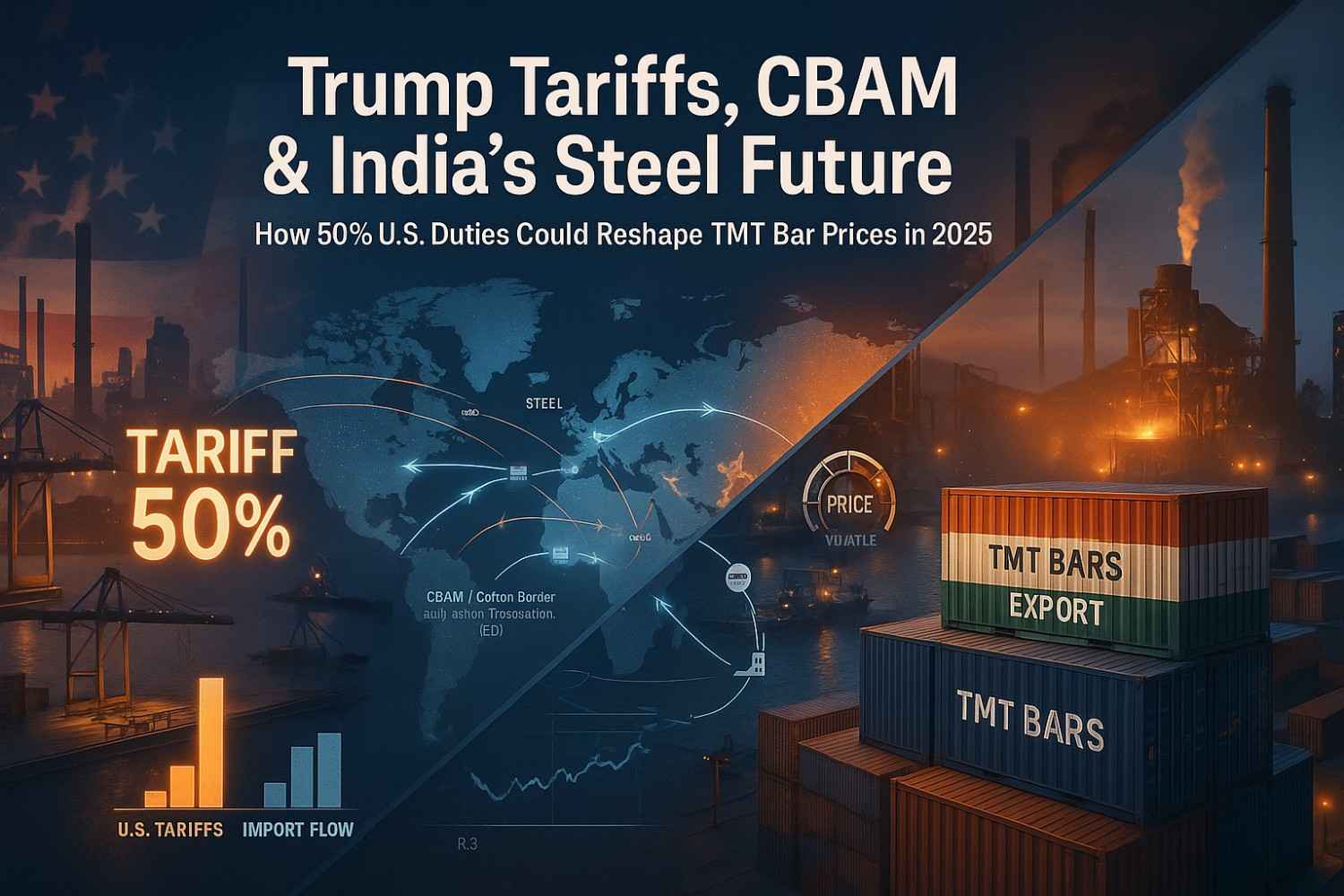
In August 2025, President Donald Trump stunned global trade watchers by doubling U.S. import tariffs on a broad set of Indian goods — in many cases pushing them as high as 50%. Reuters This move is more than just headline news. For India’s steel and TMT bar ecosystem, it threatens to redraw trade flows, cost structures, and procurement strategies.
Meanwhile, another looming disruptor—Europe’s Carbon Border Adjustment Mechanism (CBAM)—may pose a bigger long-term threat to Indian steel exports than the U.S. tariffs themselves.
In this post, we will:
-
Examine what this 50% U.S. tariff means for Indian exporters and domestic steel pricing
-
Assess CBAM’s growing influence on India’s steel industry
-
Analyze how these trade shifts may ripple into TMT bar prices
-
Offer contractor-centric strategies to navigate this volatile landscape
What’s Behind the U.S. 50% Tariff Move?
U.S. Tariff Policy & Timing
On August 27, 2025, Trump’s administration officially enforced additional tariffs on Indian imports—many now facing up to 50% duty. The move was partly justified as a retaliatory measure over India’s continued purchase of Russian oil, but its breadth across multiple sectors (steel included) sent shockwaves through Indian export-dependent industries. Reuters
CFR’s analysis notes that the 50% tariffs stem from Section 232 of the Trade Expansion Act, which allows tariffs for national security justifications. Council on Foreign Relations
Impact on India-U.S. Trade Relations
The measure cooled down diplomatic ties. India responded through bilateral negotiation intentions and even proposed doubling its retaliatory duties on U.S. goods as a countermeasure. SteelOrbis
However, trade experts point out that India’s direct steel exports to the U.S. are very limited; the bigger threat lies in indirect trade flow changes and supply chain pressure.

Why CBAM May Be a Bigger Threat Than U.S. Tariffs
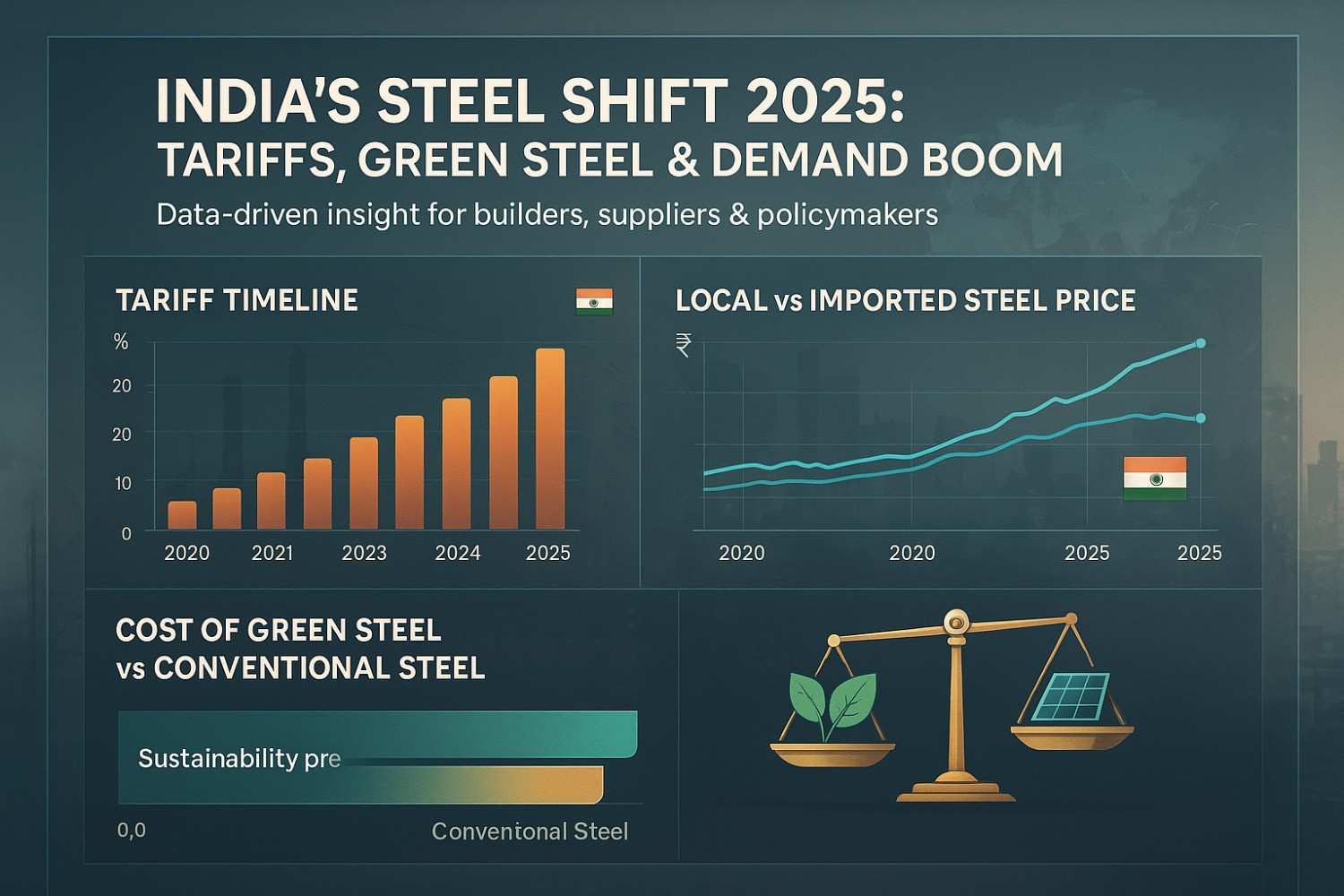
CBAM (Carbon Border Adjustment Mechanism) aims to impose taxes on goods entering Europe based on their carbon footprint. Since ~two-thirds of India’s steel exports go to Europe, the looming carbon tax is a serious concern for the steel sector.
The Indian Steel Secretary has warned that while U.S. tariffs have limited impact (given low U.S.-India steel trade), CBAM will force Indian mills to re-engineer processes or face export restrictions.
How These Trade Shocks Ripple into TMT Bar Prices
1. Increased Raw Material Cost Pressure
Because steel and alloy flows get rerouted, demand for inputs (like scrap, alloying materials) may spike, pushing up cost for domestic producers.
2. Margin Squeezing for Export-Oriented Mills
Mills producing for export may see thinner margins, which might be passed down as higher domestic prices for TMT bars over time.
3. Oversupply in Domestic Market
If export channels constrict, excess steel supply may flood the local market — potentially lowering structural steel prices temporarily (especially for non-value-add steel).
S&P Global predicted Indian steel prices may fall ~₹3,000 per tonne due to global reshuffling.
Strategies for Contractors & Steel Buyers
Prefer local, robust suppliers with strong balance sheets and buffer inventory
Lock in prices earlier via contracts or advance orders
Diversify sourcing regions beyond export-vulnerable lines
Push for green-ready suppliers (for CBAM resilience)
Monitor daily price swings and announcements
Suggested Article– “TMT Bar Price Trends 2025” for trend shift.
Conclusion
Trump’s 50% tariff move was a jolt, but CBAM may be the tidal wave to watch. For India’s TMT bar market, the way forward is strategic agility, supplier resilience, and forward-thinking procurement.
📌 If you’re a builder, contractor, or steel buyer trying to interpret these changes in your project budget:
Reach out to APL Apollo TMT Bars for pricing, supply checks, or long-term contracts
Share your concerns or observations in comments below — let’s make this an industry dialogue.
📞 Contact Us:
APL Apollo TMT
Phone: 9266157778
Website: https://aplapollosgtmt.com
