

 Why Strut Channels Are Critical in Solar Structures
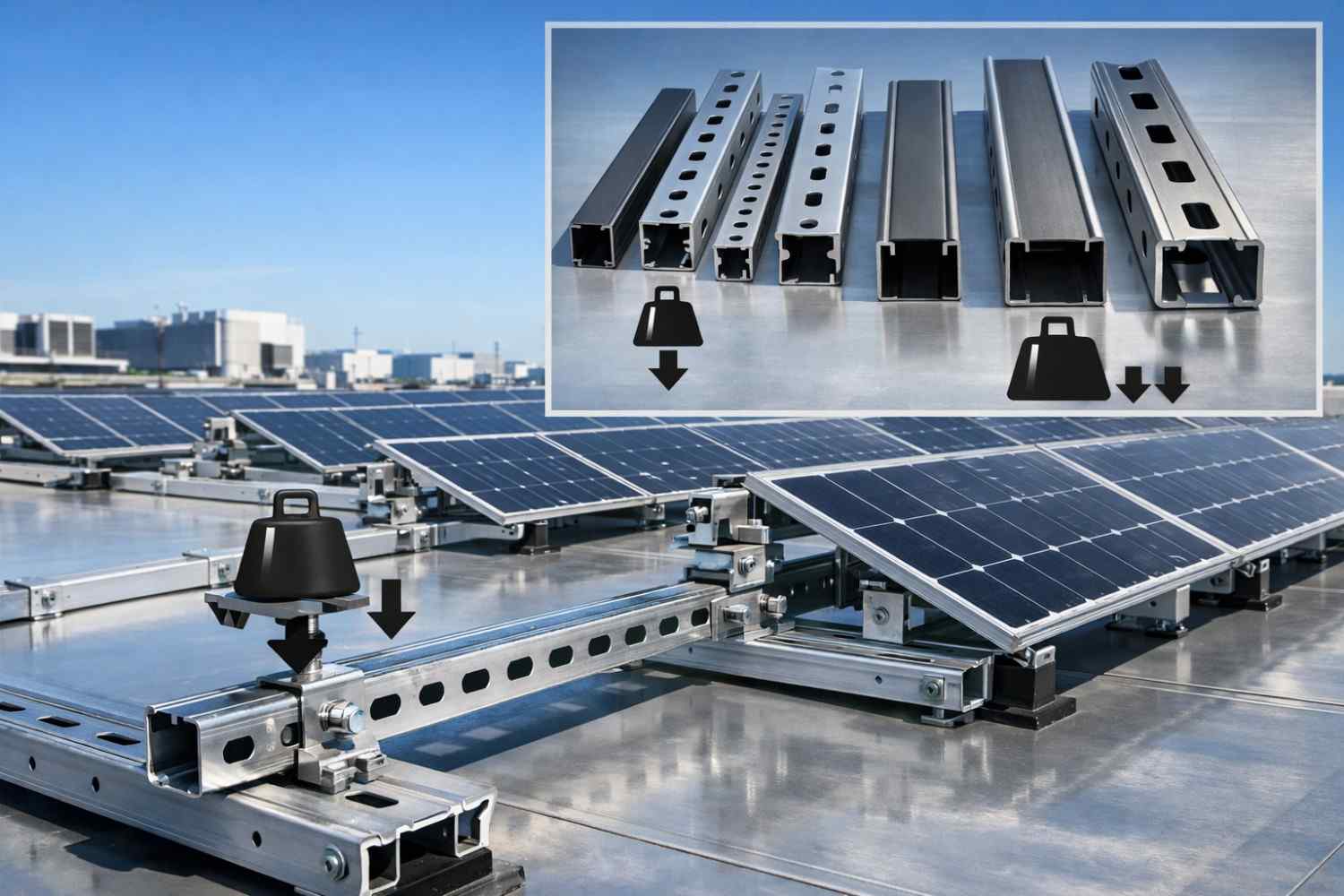
Strut channels are not just connectors—they are load distributors and structural stabilizers.
Key Roles:
- Supporting solar panels and mounting frames
- Distributing wind and dead loads
- Enabling modular and flexible installation
- Reducing on-site fabrication time
 This is why modern solar EPC companies prefer engineered strut systems over traditional fabrication.
 Types of Strut Channels Used in Solar Projects
 1. Standard Strut Channel
- Basic structural support
- Used in small to medium installations
2. Slotted Strut Channel
- Pre-punched holes
- Easy bolt-based installation
- Reduced labor time
3. Back-to-Back Strut Channel
- Higher load-bearing capacity
- Used in large solar farms
4. Hot-Dip Galvanized Strut
- Corrosion-resistant
- Ideal for outdoor and coastal environments
 Strut Channel Sizes & Specifications
Choosing the right size is essential for performance and safety.
 Common Size Range
| Size (mm) | Thickness | Application |
|---|---|---|
| 41 x 41 | 2–2.5 mm | Rooftop solar |
| 41 x 62 | 2.5–3 mm | Medium load |
| 41 x 82 | 3 mm+ | Large installations |
Size selection depends on span length, load conditions, and project scale.
📈 Strut Channel Selection Snapshot
| Factor | Recommendation |
|---|---|
| Rooftop Solar | 41×41 mm, light-duty |
| Ground Mount | 41×62 / 41×82 mm |
| Corrosion Protection | Hot-dip galvanized |
| Fastening | High-quality fasteners |
| Load Condition | Based on wind + dead load |
latest TMT bar prices in India
 Load Capacity of Strut Channels
Load capacity is influenced by:
- Section size
- Thickness
- Material grade
- Mounting configuration
 General Insight
- Smaller sections → Light load (rooftop)
- Larger sections → Heavy load (utility-scale projects)
Proper load calculation ensures: Structural safety Long-term durability Reduced maintenance
 How to Choose the Right Strut Channel
Selecting the correct strut channel is a technical + commercial decision.
1. Understand Project Type
- Rooftop → Lightweight sections
- Ground-mounted → Heavy-duty sections
2. Evaluate Load Conditions
Consider:
- Wind load
- Dead load
- Panel weight
3. Check Corrosion Protection
For outdoor installations:
- Prefer galvanized steel
- Ensure long-term resistance
4. Ensure Compatibility with Fasteners
A well-designed system requires proper integration with fastening components.
Using high-quality fasteners suppliers in India ensures better structural integrity and durability.
5. Choose Reliable Manufacturing Quality
Consistency in:
- Thickness
- Coating
- Dimensions
Directly impacts performance.
 Strut Channel vs Traditional Fabrication
| Factor | Strut Channel | Traditional Fabrication |
|---|---|---|
| Installation | Fast | Time-consuming |
| Flexibility | High | Limited |
| Maintenance | Low | Moderate |
| Precision | High | Variable |
This is why strut systems are becoming the preferred choice in modern solar infrastructure.
