


How to Choose the Right Angle & Channel Size for Your Construction Project
📌 Introduction
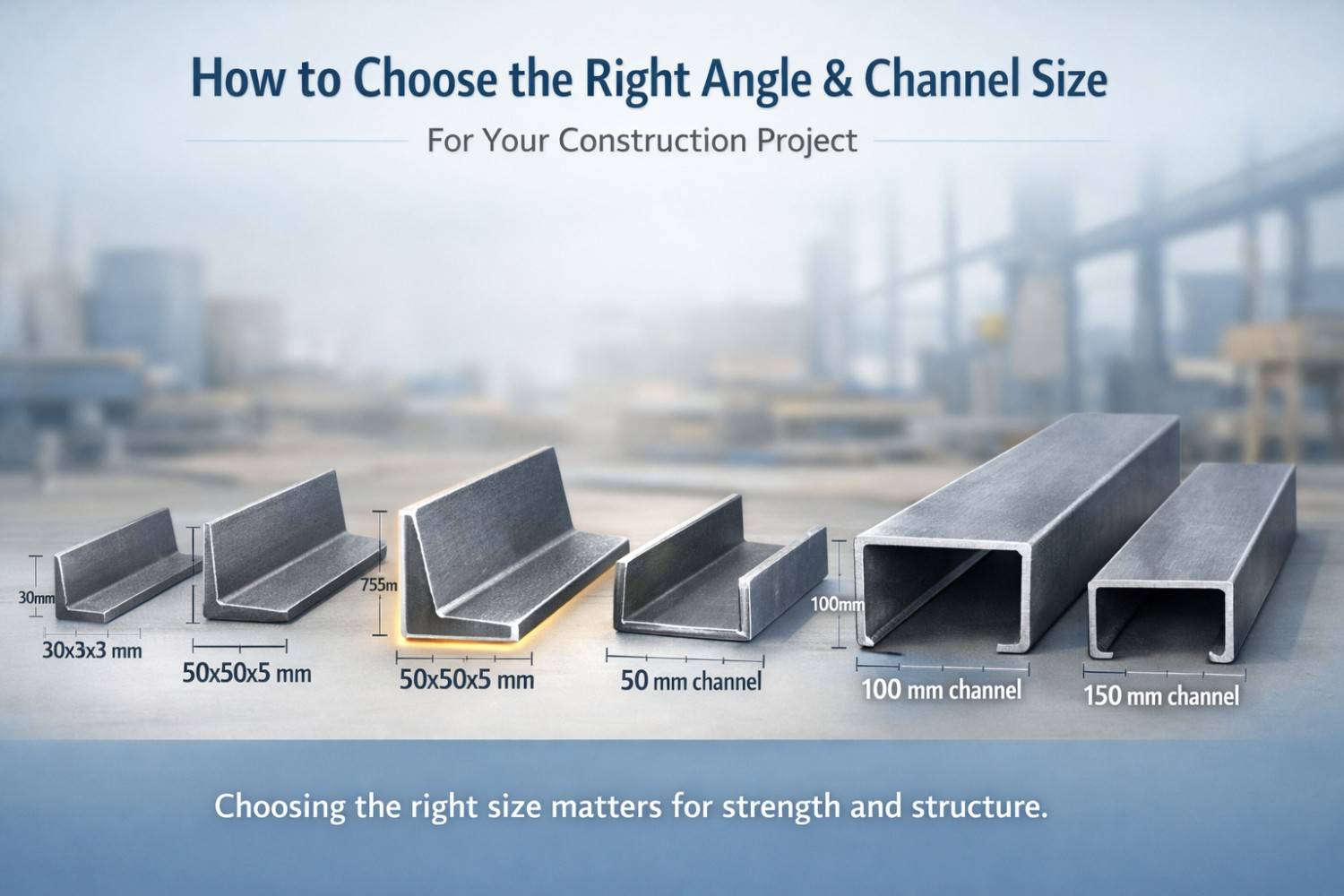
Choosing the right structural section is critical in construction. Proper angle channel size selection ensures better load distribution, structural stability, and long-term performance in any project.
👉Read: steel demand trends in India
The challenge, however, is not availability—it’s choosing the right size, thickness, and configuration based on project requirements.
📌 How to Choose the Right Angle & Channel Size? (Quick Answer)
The right angle or channel size depends on load requirements, span length, and application type. Smaller sections are used for light fabrication, while larger sections with higher thickness are suitable for heavy structural and load-bearing applications.
🧱 Understanding Angle vs Channel Sections
Before selecting sizes, it’s important to understand where each section is typically used.
🔹 Angle Sections
- L-shaped profiles
- Used in frames, supports, and bracing
- Suitable for both light and medium structural applications
🔹 Channel Sections
- U-shaped profiles
- Used in structural supports, beams, and frameworks
- Ideal for load-bearing and alignment-critical applications
👉 In many projects, both are used together for balanced structural performance.
📏 Key Factors to Consider Before Selecting Size
Choosing the right section is not about guesswork—it’s about application-based selection.
✔ 1. Load Requirement
- Light load → Smaller angles (25×25, 32×32)
- Medium load → 40×40, 50×50, 60×60
- Heavy load → 75×75, 100×100 and above
👉 Incorrect sizing can lead to structural stress or overdesign costs.
✔ 2. Span Length
Longer spans require:
- Thicker sections
- Higher dimensional stability
✔ 3. Application Type
| Application | Recommended Section |
|---|---|
| Fabrication work | Small to medium angles |
| Industrial structures | Heavy angles & channels |
| Solar structures | Precision channels & angles |
| Support frames | Combination sections |
✔ 4. Environmental Conditions
- Outdoor use → corrosion-resistant sections
- Industrial zones → higher thickness preferred
📊 Standard Angle Sizes & Practical Use
Based on commonly used structural requirements:
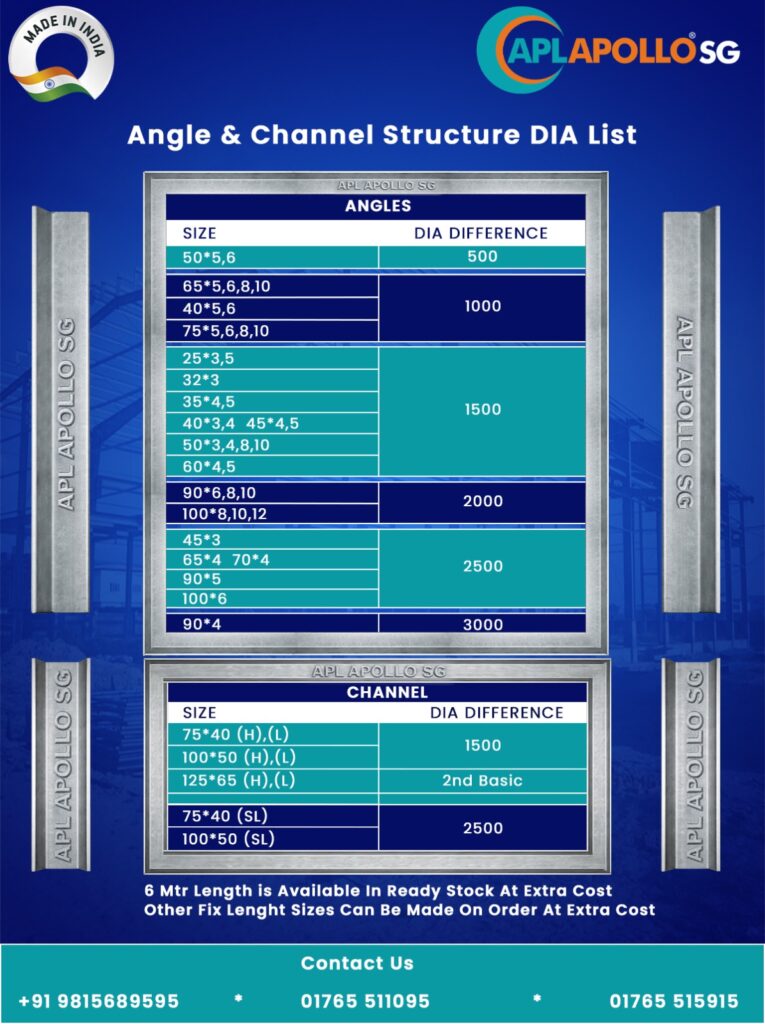
🔹 Widely Used Angle Sizes
- 25×25, 32×32 → Light fabrication
- 40×40, 45×45 → General construction
- 50×50, 60×60 → Medium structural support
- 75×75 → Heavy-duty applications
- 100×100 → High load-bearing structures
👉 Thickness options (6 mm, 8 mm, 10 mm, 12 mm) further define strength capacity.
📊 Channel Section Sizes & Applications
🔹 Common Channel Sizes
- 75×40 → Light structures
- 100×50 → Medium load applications
- 125×65 → Heavy structural usage
👉 Available in variations like:
- H/L (Heavy/Light)
- S/L (Standard/Light)
📈 Angle & Channel Selection Snapshot
| Factor | Recommendation |
|---|---|
| Light Fabrication | 25×25 to 40×40 angles |
| Medium Structures | 50×50 to 60×60 |
| Heavy Load | 75×75 to 100×100 |
| Channel Selection | Based on span & load |
| Length Preference | Custom > Standard |
👉 Improves:
✔ Dwell time
✔ Readability
✔ SERP performance
📐 Why Size Accuracy Matters in Real Projects
In actual construction scenarios:
- Even small deviations affect alignment
- Improper sizing increases wastage
- Overdesign leads to higher cost
👉 This is why many projects now prefer standardized and precision-engineered sections instead of on-site adjustments.
⚙️ Standard vs Custom Lengths: What to Choose?
Most structural sections are available in standard lengths, but customization often makes a big difference.
✔ Standard Supply
- Commonly available in 8-meter lengths
✔ Custom Length Advantage
- Reduces cutting wastage
- Improves installation efficiency
- Saves labor cost
👉 Custom sizing is especially useful in large-scale or repetitive structures.
📉 Common Mistakes to Avoid
- Choosing sections based only on price
- Ignoring load calculations
- Using the same size for all applications
- Not considering customization options
👉 These mistakes often result in higher long-term costs and inefficiencies.
📈 Industry Insight
From a practical standpoint, structural efficiency is not just about using stronger materials—it’s about using the right section in the right place.
Projects that focus on proper sizing and material planning tend to achieve:
- Better load performance
- Reduced wastage
- Faster execution
🔗 Practical Tip for Builders & Contractors
Before finalizing structural sections:
- Evaluate load and span
- Match size with application
- Consider standard vs custom lengths
👉 This approach ensures both cost efficiency and structural reliability.
👷 Practical Engineering Perspective
In real construction scenarios, structural failures are rarely due to material strength alone—they often result from incorrect section selection. Choosing the right angle or channel size ensures balanced load distribution, reduces stress concentration, and improves long-term structural performance.
📌 Conclusion
Choosing the right angle and channel size is a foundational step in any construction or fabrication project. It impacts not just strength, but also cost, efficiency, and long-term performance.
Instead of relying on assumptions, a structured selection approach—based on load, application, and size accuracy—helps achieve better results.
📣Planning a construction or fabrication project?
Choosing the right structural section can make a significant difference in performance and efficiency. Make informed decisions based on application, load, and sizing rather than just availability.
